Introduction
A stainless steel perforated tube is one of the most widely used structural and filtration components in industrial equipment. Combining excellent corrosion resistance, high mechanical strength, and precise perforation patterns, these tubes provide reliable support, controlled flow distribution, and long service life in demanding environments.
From water treatment facilities and chemical processing plants to oil refineries, food production lines, pharmaceutical manufacturing, and dust collection systems, the perforated tube has become an essential component wherever filtration, screening, or media support is required. Its ability to withstand corrosive chemicals, elevated temperatures, and continuous mechanical stress makes stainless steel the preferred material for industrial filtration and OEM manufacturing.
Whether you are designing a new filtration system, replacing worn components, or sourcing custom parts for industrial equipment, understanding the features, material grades, manufacturing methods, and selection criteria of stainless steel perforated tubes helps ensure optimal performance and long-term value.
This guide explains everything engineers, procurement professionals, and equipment manufacturers need to know about selecting the right stainless steel perforated tube for their applications.
Before selecting the right stainless steel perforated tube for your application, it’s helpful to understand the fundamentals of how perforated tubing functions. Our guide, “What Is a Perforated Tube and How Does It Work?“, explains the basic structure, manufacturing process, hole patterns, working principle, and key industrial applications of perforated tubes. Whether you’re new to industrial filtration or comparing different tube designs, this resource provides the foundation needed to make informed engineering and purchasing decisions. It also explains how perforated tubes support filter media, improve flow distribution, and enhance filtration efficiency across a wide range of industries.
What Is a Stainless Steel Perforated Tube?
A stainless steel perforated tube is a cylindrical tube manufactured from stainless steel sheet or plate that contains a series of precisely engineered holes. These perforations are produced using CNC punching, laser cutting, or precision stamping before the sheet is rolled and welded into a tube.
Unlike solid tubes, perforated tubes are designed to allow fluids, gases, or air to pass through the wall while maintaining structural integrity. The hole diameter, spacing, open area, and tube dimensions are customized according to the required flow rate, filtration efficiency, and mechanical strength.
Basic Structure
A typical SS perforated tube consists of:
- Stainless steel body
- Precision perforated holes
- Longitudinal welded seam (or seamless design for specific applications)
- Smooth internal and external surfaces
- Optional reinforcement rings or end caps
Depending on the application, the tube may also include additional support layers such as wire mesh, sintered media, or filter fabrics.
How Does a Stainless Steel Perforated Tube Work?
The working principle is straightforward. The perforations allow liquids, gases, or fine particles to pass through the tube wall while supporting filter media or separating contaminants.
For example:
- In a filter cartridge, the perforated tube acts as the internal support core, preventing media collapse under pressure.
- In dust collection systems, it supports pleated filter elements while maintaining airflow.
- In water treatment systems, it distributes flow evenly across filtration media.
- In chemical processing equipment, it protects filtration materials from mechanical deformation.
The combination of open area and structural rigidity enables efficient flow without compromising strength.
Manufacturing Overview
Although designs vary by manufacturer, most stainless steel perforated tubes are produced through the following sequence:
- Selection of stainless steel grade
- Precision perforation of flat sheet
- Rolling into cylindrical form
- Longitudinal welding
- Weld polishing and surface finishing
- Dimensional inspection
- Mechanical testing
- Packaging for shipment
Modern production lines use CNC-controlled equipment to achieve consistent hole accuracy, roundness, and weld quality.
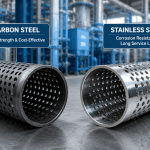
Stainless Steel vs. Carbon Steel Perforated Tubes
Choosing between stainless steel and carbon steel depends on the operating environment. While both materials provide structural support, stainless steel offers significant advantages in corrosive and hygienic applications.
| Feature | Stainless Steel Perforated Tube | Carbon Steel Perforated Tube |
| Corrosion Resistance | Excellent | Poor without coating |
| Rust Protection | Natural chromium oxide layer | Requires painting or galvanizing |
| Food Processing | Suitable | Generally unsuitable |
| Chemical Resistance | High | Limited |
| Maintenance | Low | Higher |
| Service Life | Long | Moderate |
| Initial Cost | Higher | Lower |
| Life-Cycle Cost | Lower over time | Higher due to maintenance |
For environments involving moisture, chemicals, saltwater, or strict hygiene standards, stainless steel is typically the preferred choice.
Key Features of Stainless Steel Perforated Tubes
Excellent Corrosion Resistance
The defining characteristic of stainless steel is its ability to resist corrosion. Chromium in the alloy forms a passive oxide layer that protects the surface from oxidation and chemical attack.
This makes stainless steel perforated tubes suitable for:
- Marine environments
- Chemical plants
- Wastewater treatment
- Food production
- Pharmaceutical processing
Industrial Example:
A 316 stainless steel perforated tube used in a seawater filtration system can provide years of reliable service with minimal corrosion, whereas untreated carbon steel may deteriorate rapidly under similar conditions.
High Mechanical Strength
Despite containing thousands of perforations, a properly designed perforated steel tube retains excellent structural strength.
This allows it to:
- Support heavy filter media
- Resist collapse under differential pressure
- Withstand vibration
- Handle continuous industrial operation
High-strength perforated tubes are commonly used as support cores in hydraulic filters and industrial filter cartridges.
Outstanding Durability
Industrial filtration systems often operate continuously for extended periods. Stainless steel’s resistance to wear, impact, and fatigue helps maintain performance under demanding conditions.
Applications include:
- Mining equipment
- Cement plants
- Dust collectors
- Petrochemical facilities
Durable construction reduces replacement frequency and minimizes downtime.
Heat and Temperature Resistance
Many industrial processes involve elevated temperatures that exceed the limits of plastic or coated metal components.
Depending on the grade, stainless steel perforated tubes can operate in high-temperature environments while maintaining structural integrity.
Common applications include:
- Exhaust systems
- Furnace filtration
- Heat exchangers
- Industrial dryers
- Thermal processing equipment
Hygienic Surface for Food & Pharmaceutical Industries
The smooth, non-porous surface of stainless steel is easy to clean and resistant to bacterial growth, making it suitable for sanitary applications.
When manufactured from food-grade materials such as SS304 or SS316, perforated tubes can be integrated into:
- Beverage filtration
- Dairy processing
- Pharmaceutical production
- Brewing systems
- Food ingredient processing
Electropolishing further enhances cleanliness by reducing surface roughness.
Excellent Flow Distribution
Uniform hole patterns help distribute fluids or gases evenly across the filtration system.
Benefits include:
- Reduced pressure drop
- Improved filtration efficiency
- More consistent media utilization
- Balanced airflow
- Lower energy consumption
Engineers often optimize hole size and open area to achieve the desired flow characteristics.
Lightweight Yet Strong Construction
Perforations remove unnecessary material while preserving strength through optimized hole geometry.
Advantages include:
- Easier handling
- Reduced equipment weight
- Lower shipping costs
- Improved installation efficiency
This balance of strength and weight is especially valuable in OEM equipment manufacturing.
Easy Fabrication and Welding
Stainless steel perforated tubes can be customized through:
- Cutting
- Welding
- Bending
- Machining
- Flanging
- End cap installation
Their versatility enables manufacturers to produce application-specific designs without compromising performance.
Long Service Life
A properly manufactured stainless steel perforated tube offers an extended operational lifespan due to its resistance to corrosion, wear, and mechanical stress.
Long-term durability reduces replacement frequency and contributes to lower total ownership costs, particularly in continuous industrial operations.
Low Maintenance Requirements
Compared with coated carbon steel, stainless steel requires minimal maintenance.
Routine cleaning and periodic inspections are generally sufficient to maintain performance.
For facilities operating multiple filtration systems, reduced maintenance translates into:
- Lower labor costs
- Less downtime
- Improved equipment reliability
- Lower lifecycle expenses
Types of Stainless Steel Perforated Tubes
Selecting the correct stainless steel grade is one of the most important decisions when specifying a perforated tube. Different grades offer varying levels of corrosion resistance, strength, weldability, and temperature performance.
304 Stainless Steel Perforated Tube
The 304 stainless steel perforated tube is the most commonly used option for general industrial applications. It contains approximately 18% chromium and 8% nickel, providing excellent corrosion resistance in fresh water, mild chemical environments, and indoor industrial settings.
Typical applications include:
- Water filtration
- Dust collection
- Food processing equipment
- Air filtration
- HVAC systems
- OEM machinery
Advantages:
- Excellent value for money
- Easy fabrication and welding
- Good corrosion resistance
- Widely available
316 Stainless Steel Perforated Tube
The 316 stainless steel perforated tube contains molybdenum, significantly improving resistance to chlorides, acids, and aggressive chemicals.
Typical applications include:
- Marine filtration
- Chemical processing
- Oil and gas facilities
- Pharmaceutical equipment
- Coastal installations
Advantages:
- Superior corrosion resistance
- Better performance in saline environments
- Longer service life under harsh conditions
316L Stainless Steel Perforated Tube
The 316L perforated tube has a lower carbon content than standard 316 stainless steel, reducing the risk of carbide precipitation during welding.
It is commonly selected for:
- Pressure vessels
- High-purity systems
- Pharmaceutical production
- Biotechnology equipment
- High-quality welded assemblies
Benefits include:
- Improved weldability
- Excellent corrosion resistance
- Better resistance after welding
- Suitable for sanitary applications
Duplex Stainless Steel Perforated Tube
Duplex stainless steels combine an austenitic and ferritic microstructure, offering exceptional mechanical strength and enhanced resistance to stress corrosion cracking.
Typical applications include:
- Offshore platforms
- Desalination plants
- High-pressure filtration systems
- Petrochemical facilities
Advantages:
- High strength-to-weight ratio
- Excellent chloride resistance
- Long service life in aggressive environments
Custom Stainless Steel Perforated Tube
Many industrial projects require custom-designed tubes to meet specific operational requirements. Customization options may include:
- Tube diameter
- Wall thickness
- Hole size
- Hole pattern
- Open area percentage
- Tube length
- Surface finish
- End fittings
- Reinforcement rings
- Special alloys for demanding environments
Custom perforated tubes are commonly used in OEM filtration systems, specialized processing equipment, and engineered industrial solutions.
Stainless Steel Grade Comparison
| Grade | Corrosion Resistance | Strength | Temperature Resistance | Relative Cost | Typical Applications |
| 304 | Excellent | High | High | $$ | Water treatment, HVAC, food processing |
| 316 | Outstanding | High | Very High | $$$ | Chemical processing, marine, oil & gas |
| 316L | Outstanding | High | Very High | $$$ | Pharmaceutical, sanitary systems, welded assemblies |
| Duplex | Exceptional | Very High | Very High | $$$$ | Offshore, desalination, petrochemical |
| Custom Alloys | Application-specific | Varies | Varies | Project-dependent | OEM equipment, specialized filtration |
Manufacturing Process of Stainless Steel Perforated Tubes
The manufacturing quality of a stainless steel perforated tube directly affects its strength, dimensional accuracy, corrosion resistance, and service life. Precision manufacturing ensures the tube performs reliably in demanding applications such as industrial filtration, chemical processing, water treatment, and OEM equipment.
Professional manufacturers follow strict quality management systems and industry standards to produce consistent, high-performance perforated tubes.
1. Material Selection
The manufacturing process begins with selecting the appropriate stainless steel grade based on the operating environment and application requirements.
Common material grades include:
- 304 Stainless Steel – General industrial applications
- 316 Stainless Steel – Corrosive and marine environments
- 316L Stainless Steel – Pharmaceutical and sanitary applications
- Duplex Stainless Steel – High-pressure and offshore applications
Material selection depends on several factors:
- Corrosion resistance
- Mechanical strength
- Operating temperature
- Pressure requirements
- Chemical compatibility
- Food-grade or pharmaceutical requirements
Many manufacturers source materials that comply with recognized standards such as ASTM, ASME, and ISO to ensure consistent quality.
2. Sheet Perforation
Once the raw material is selected, stainless steel sheets are perforated using precision manufacturing equipment.
Common perforation methods include:
- CNC punching
- High-speed turret punching
- Laser cutting (for specialized designs)
- Precision stamping
The perforation stage determines:
- Hole diameter
- Hole spacing
- Open area percentage
- Hole pattern
- Flow characteristics
- Structural strength
Modern CNC machines maintain tight tolerances, ensuring every hole is accurately positioned for consistent filtration performance.
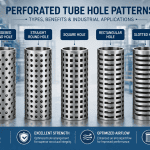
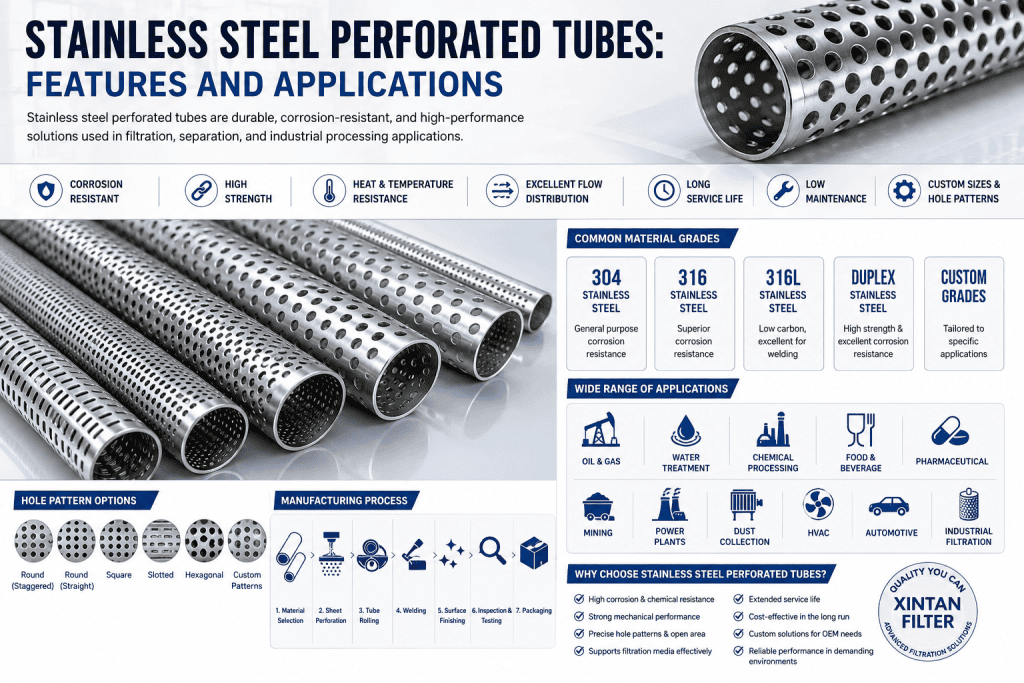
Common Hole Patterns
| Hole Pattern | Characteristics | Typical Applications |
| Round Hole (60° Staggered) | Highest open area and strength | Filter cartridges, water filtration |
| Round Hole (Straight) | Uniform alignment | OEM equipment, support tubes |
| Square Hole | Increased flow and screening | Mining and bulk material handling |
| Slotted Hole | Excellent drainage and directional flow | Water treatment, wedge support |
| Hexagonal Pattern | High open area | Specialized filtration systems |
| Custom Pattern | Designed for specific requirements | OEM filtration components |
The hole pattern directly influences pressure drop, filtration efficiency, and structural integrity.
3. Tube Rolling
After perforation, the flat sheet is rolled into a cylindrical shape using precision rolling equipment.
During this stage, manufacturers carefully control:
- Tube diameter
- Roundness
- Straightness
- Seam alignment
- Dimensional accuracy
Proper rolling minimizes distortion and ensures the perforations remain evenly distributed around the tube.
4. Welding
The rolled sheet is then joined using precision welding processes.
Common welding methods include:
- TIG (GTAW) welding
- Laser welding
- Plasma welding
High-quality welding provides:
- Strong longitudinal seams
- Minimal distortion
- Smooth internal surfaces
- Excellent corrosion resistance after finishing
For sanitary or pharmaceutical applications, welds are often ground and polished to eliminate crevices where contaminants could accumulate.
5. Surface Finishing
Surface finishing improves both appearance and performance.
Typical finishes include:
- Mill finish
- Pickling and passivation
- Mechanical polishing
- Electropolishing
- Brushed finish
Benefits include:
- Improved corrosion resistance
- Easier cleaning
- Better hygiene
- Reduced surface roughness
- Enhanced product appearance
Electropolishing is particularly valuable in food, beverage, and pharmaceutical industries where smooth, cleanable surfaces are essential.
6. Polishing
Depending on customer specifications, tubes may undergo additional polishing to achieve the required surface roughness.
Advantages of polished stainless steel perforated tubes include:
- Reduced product contamination
- Improved cleanability
- Lower bacterial adhesion
- Enhanced corrosion resistance
- Professional appearance for visible installations
Mirror-polished finishes are often specified for sanitary processing systems and high-purity applications.
7. Inspection
Before shipment, every SS perforated tube should undergo thorough dimensional inspection.
Typical inspection items include:
- Outside diameter (OD)
- Inside diameter (ID)
- Wall thickness
- Tube length
- Hole diameter
- Hole pitch
- Hole alignment
- Roundness
- Straightness
- Weld quality
Advanced manufacturers use digital measuring equipment and optical inspection systems to verify dimensional accuracy.
8. Quality Testing
Quality testing ensures the finished product meets customer specifications and performs reliably in service.
Common tests include:
- Visual inspection
- Dimensional verification
- Weld integrity testing
- Pressure testing (where required)
- Mechanical strength testing
- Corrosion resistance evaluation
- Surface finish measurement
- Material certification review
For critical industries such as pharmaceuticals or oil and gas, additional non-destructive testing (NDT) may be performed.
9. Packaging and Shipping
Proper packaging protects perforated tubes during transportation and storage.
Professional manufacturers typically use:
- Protective plastic sleeves
- Anti-corrosion wrapping
- Wooden crates
- Steel pallets
- Custom packaging for export
Clear labeling with material grade, dimensions, batch numbers, and inspection records improves traceability and inventory management.
Applications of Stainless Steel Perforated Tubes
The versatility of the stainless steel perforated tube makes it an essential component across numerous industries. Its combination of corrosion resistance, structural strength, and controlled flow characteristics allows it to serve as both a filtration support and a functional process component.
Oil & Gas Industry
Oil and gas operations expose equipment to abrasive particles, high pressures, elevated temperatures, and corrosive chemicals. Stainless steel perforated tubes are widely used as support cores in filter cartridges and separators to maintain structural integrity under demanding conditions.
Typical applications include:
- Wellhead filtration
- Hydraulic systems
- Natural gas processing
- Fuel filtration
- Offshore production platforms
- Refinery process filtration
Grades such as 316 stainless steel and Duplex stainless steel are commonly selected for their superior resistance to chlorides and aggressive process media.
Water Treatment
Water treatment facilities rely on stainless steel filter tubes to support filtration media and promote uniform flow distribution. Their resistance to corrosion and long service life make them suitable for continuous operation in municipal and industrial systems.
Common uses include:
- Sand filter support tubes
- Activated carbon filtration
- Reverse osmosis pre-filtration
- Wastewater treatment
- Desalination plants
- Industrial water recycling
Uniform perforation patterns help reduce pressure loss while improving filtration efficiency.
Chemical Processing
Chemical processing environments often involve acids, alkalis, solvents, and other corrosive substances. Stainless steel perforated tubes provide reliable performance where material compatibility is essential.
Typical applications include:
- Chemical reactors
- Catalyst support systems
- Process filtration
- Solvent recovery
- Resin filtration
- Acid processing equipment
For highly corrosive environments, 316L perforated tubes are frequently specified due to their enhanced corrosion resistance and weldability.
Food & Beverage Industry
Food-grade stainless steel perforated tubes are used in processing equipment where hygiene and cleanability are critical. Smooth surfaces and corrosion resistance help maintain product quality and comply with sanitary requirements.
Applications include:
- Beverage filtration
- Brewing systems
- Dairy processing
- Sugar production
- Edible oil filtration
- Ingredient processing
Electropolished finishes are often selected to reduce surface roughness and simplify cleaning.
Pharmaceutical Industry
Pharmaceutical manufacturing requires components that meet strict cleanliness and material standards. SS316L perforated tubes are commonly used because of their excellent corrosion resistance, low carbon content, and compatibility with clean-in-place (CIP) systems.
Typical applications:
- Sterile filtration systems
- Purified water systems
- Process vessels
- Tablet production equipment
- Biopharmaceutical processing
- High-purity fluid handling
Mining Industry
Mining operations generate abrasive dust, slurry, and heavy particulate matter. Stainless steel perforated tubes provide robust support for filtration systems operating under harsh conditions.
Common uses:
- Dust collectors
- Slurry filtration
- Dewatering equipment
- Ore processing
- Mineral recovery systems
Their high mechanical strength helps resist deformation under heavy loads and vibration.
Power Plants
Power generation facilities require reliable filtration to protect turbines, boilers, and cooling systems. Perforated tubes serve as support cores in filter cartridges and fluid handling systems.
Applications include:
- Cooling water filtration
- Boiler feedwater systems
- Lubrication oil filtration
- Condensate polishing
- Air intake filtration
Dust Collection Systems
Industrial dust collectors rely on perforated tubes to support pleated filter media and maintain airflow. The open area of the tube allows efficient air passage while preventing filter collapse.
Used in:
- Cement plants
- Woodworking facilities
- Metal fabrication
- Food processing
- Pharmaceutical production
HVAC Systems
Heating, ventilation, and air conditioning systems use perforated tubes in air filtration units to improve airflow and support filter elements.
Benefits include:
- Uniform air distribution
- Reduced pressure drop
- Long service life
- Improved indoor air quality
Automotive Industry
Automotive manufacturers incorporate stainless steel perforated tubes into various filtration and exhaust systems where durability and heat resistance are essential.
Examples include:
- Exhaust silencers
- Fuel filtration
- Hydraulic systems
- Emission control equipment
Industrial Filtration
Industrial filtration remains the largest application for perforated filter tubes. They provide structural support for filter media while allowing fluids or gases to flow efficiently through the system.
Applications include:
- Liquid filtration
- Gas filtration
- Hydraulic filters
- Dust filtration
- Air purification
- Process filtration
OEM Equipment Manufacturing
OEM manufacturers often require custom perforated tubes designed to fit proprietary machinery and specialized industrial equipment.
Customization options include:
- Tube diameter
- Wall thickness
- Hole size and pattern
- Open area percentage
- Surface finish
- End caps and fittings
- Material grade
Reliable manufacturers work closely with OEMs to deliver components tailored to specific performance requirements.
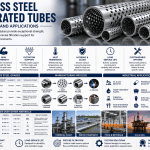
Industry Application Summary
| Industry | Typical Use | Recommended Grade |
| Oil & Gas | Filter support, separators | 316 / Duplex |
| Water Treatment | Filter cores, media support | 304 / 316 |
| Chemical Processing | Process filtration | 316 / 316L |
| Food & Beverage | Sanitary filtration | 304 / 316L |
| Pharmaceutical | High-purity systems | 316L |
| Mining | Dust and slurry filtration | 304 / Duplex |
| Power Plants | Cooling and lubrication systems | 304 / 316 |
| Dust Collection | Pleated filter support | 304 |
| HVAC | Air filtration | 304 |
| Automotive | Exhaust and fuel systems | 304 / 316 |
| Industrial Filtration | Filter cartridges | 304 / 316 |
| OEM Equipment | Custom components | Custom Grades |
Advantages of Stainless Steel Perforated Tubes Over Other Materials
Selecting the right material is one of the most important decisions when designing an industrial filtration system or purchasing OEM components. While carbon steel, galvanized steel, aluminum, and nickel alloys all have specific advantages, stainless steel perforated tubes offer the best balance of durability, corrosion resistance, mechanical strength, and lifecycle cost for most industrial applications.
Although the initial purchase price may be higher, the longer service life and lower maintenance requirements often result in a lower total cost of ownership.
Stainless Steel vs. Carbon Steel
Carbon steel is widely used because of its affordability and high strength. However, it is highly susceptible to rust and corrosion when exposed to moisture, chemicals, or outdoor environments.
Stainless Steel Advantages
- Superior corrosion resistance
- No protective coating required
- Longer service life
- Better appearance
- Lower maintenance costs
- Suitable for food-grade applications
- Better chemical compatibility
Carbon Steel Advantages
- Lower initial cost
- Good mechanical strength
- Easy to machine
Best Applications
Choose Stainless Steel For:
- Water treatment
- Food processing
- Pharmaceutical manufacturing
- Marine equipment
- Chemical plants
- Industrial filtration
Choose Carbon Steel For:
- Dry indoor environments
- Temporary equipment
- Low-cost structural applications
Stainless Steel vs. Galvanized Steel
Galvanized steel uses a zinc coating to protect the underlying steel from corrosion. While effective in mild environments, the coating can wear away over time, especially in abrasive or chemically aggressive conditions.
Stainless Steel Advantages
- Corrosion protection throughout the material
- No coating to peel or wear off
- Better chemical resistance
- Longer lifespan
- Better high-temperature performance
Galvanized Steel Advantages
- Lower purchase cost
- Good outdoor weather resistance
- Suitable for light industrial use
Typical Uses
Galvanized steel performs well in outdoor construction, while stainless steel is preferred for continuous industrial processing and filtration systems.
Stainless Steel vs. Aluminum
Aluminum is valued for its lightweight construction and natural corrosion resistance. However, it generally lacks the mechanical strength required for high-pressure filtration applications.
Stainless Steel Advantages
- Higher tensile strength
- Better wear resistance
- Higher temperature capability
- Improved pressure resistance
- Better fatigue strength
Aluminum Advantages
- Lightweight
- Easy to machine
- Good atmospheric corrosion resistance
Typical Applications
Aluminum is often selected for lightweight equipment, whereas stainless steel is preferred for industrial filter support tubes and heavy-duty process equipment.
Stainless Steel vs. Nickel Alloys
Nickel alloys provide exceptional resistance to highly aggressive chemicals and extreme temperatures. However, their significantly higher cost limits their use to specialized applications.
Stainless Steel Advantages
- Lower material cost
- Easier fabrication
- Better availability
- Excellent performance for most industrial applications
Nickel Alloy Advantages
- Extreme corrosion resistance
- Outstanding high-temperature performance
- Superior resistance to strong acids
Nickel alloys are generally reserved for highly specialized chemical plants and aerospace applications where stainless steel may not provide sufficient protection.
Material Comparison Table
| Material | Corrosion Resistance | Mechanical Strength | Temperature Resistance | Maintenance | Relative Cost | Typical Applications |
| 304 Stainless Steel | Excellent | High | High | Low | $$ | Water treatment, HVAC, food processing |
| 316 Stainless Steel | Outstanding | High | Very High | Low | $$$ | Chemical processing, marine, pharmaceutical |
| Carbon Steel | Poor | High | Moderate | High | $ | Structural applications |
| Galvanized Steel | Moderate | High | Moderate | Medium | $$ | Outdoor equipment |
| Aluminum | Good | Medium | Moderate | Low | $$ | Lightweight equipment |
| Nickel Alloys | Exceptional | Very High | Exceptional | Low | $$$$$ | Aerospace, extreme chemical processing |
Hole Pattern Comparison
The hole pattern significantly influences the flow rate, structural strength, pressure drop, and filtration performance of a perforated tube.
| Hole Pattern | Open Area | Strength | Best Applications |
| Round 60° Staggered | Very High | Excellent | Filter cartridges, industrial filtration |
| Round Straight | Medium | High | OEM machinery, support tubes |
| Square | High | Medium | Screening and material handling |
| Slotted | Medium | High | Water intake and drainage systems |
| Hexagonal | Very High | Medium | High-flow filtration systems |
| Custom Pattern | Application Specific | Application Specific | Specialized OEM equipment |
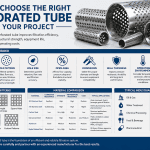
How to Choose the Right Stainless Steel Perforated Tube
Selecting the right stainless steel perforated tube requires evaluating several engineering and operational factors. Choosing based solely on price can lead to premature failure, increased maintenance, or reduced system efficiency.
1. Material Grade
The stainless steel grade should match the operating environment.
304 Stainless Steel
Best for:
- Indoor industrial applications
- Water filtration
- HVAC systems
- Food processing
- General manufacturing
316 Stainless Steel
Recommended for:
- Marine environments
- Saltwater exposure
- Chemical plants
- Oil & gas facilities
- Pharmaceutical equipment
316L Stainless Steel
Ideal when:
- Frequent welding is required
- Sanitary conditions are critical
- High-purity processing is involved
2. Hole Pattern
Different hole layouts provide different flow characteristics.
Consider:
- Required flow rate
- Particle size
- Pressure drop
- Structural strength
Round staggered holes provide the best combination of strength and open area for most filtration systems.
3. Hole Size
Hole diameter should be selected according to the filtration media and particle size.
Smaller holes:
- Better media support
- Higher strength
- Lower open area
Larger holes:
- Increased flow
- Reduced pressure loss
- Better drainage
4. Open Area
Open area is the percentage of the tube surface occupied by perforations.
Higher open area provides:
- Greater flow capacity
- Lower pressure drop
- Improved airflow
Lower open area offers:
- Greater structural rigidity
- Better support for filtration media
The ideal percentage depends on the specific application.
5. Wall Thickness
Wall thickness influences both strength and weight.
Thicker walls are recommended for:
- High-pressure systems
- Heavy filter elements
- Industrial processing
Thinner walls may be suitable for:
- Lightweight equipment
- Low-pressure applications
- Cost-sensitive projects
6. Tube Diameter
Tube diameter affects:
- Flow capacity
- Structural performance
- Installation compatibility
Always match the tube diameter to the filter housing or OEM equipment specifications.
7. Pressure Rating
Consider the maximum operating pressure and potential pressure spikes.
For demanding environments, choose tubes designed to resist deformation and media collapse under differential pressure.
8. Operating Temperature
High-temperature applications require materials that maintain strength and corrosion resistance.
Examples include:
- Furnace systems
- Heat exchangers
- Industrial dryers
- Petrochemical processing
9. Corrosion Environment
Evaluate exposure to:
- Chlorides
- Saltwater
- Acids
- Alkalis
- Solvents
- Cleaning chemicals
Aggressive environments generally require 316 or 316L stainless steel.
10. Industry Standards
Specify products manufactured in accordance with recognized standards where applicable.
Examples include:
- ASTM material specifications
- ASME requirements
- ISO quality management systems
These standards help ensure consistent material quality and manufacturing accuracy.
11. Budget and Total Cost of Ownership
While stainless steel perforated tubes typically have a higher purchase price than carbon steel alternatives, they often provide lower lifetime costs through:
- Reduced maintenance
- Longer service life
- Fewer replacements
- Improved equipment reliability
- Lower downtime
For many industrial operations, the lifecycle savings outweigh the higher initial investment.
Stainless Steel Perforated Tube Selection Checklist
| Selection Factor | Questions to Ask |
| Material Grade | Is 304, 316, or 316L required? |
| Hole Pattern | Which pattern provides the desired flow? |
| Hole Diameter | Does it adequately support the filter media? |
| Open Area | Will it provide sufficient flow capacity? |
| Wall Thickness | Can it withstand operating pressure? |
| Tube Diameter | Does it match existing equipment? |
| Operating Temperature | Is the material suitable for the process? |
| Corrosion Environment | Will chemicals or saltwater be present? |
| Standards | Are ASTM, ASME, or ISO requirements specified? |
| Supplier Experience | Can the manufacturer provide custom solutions and quality documentation? |
Maintenance and Cleaning Tips for Stainless Steel Perforated Tubes
Although a stainless steel perforated tube is designed for long-term durability, regular inspection and maintenance are essential to maximize its service life and maintain optimal filtration performance. Proper care reduces the risk of clogging, corrosion, pressure loss, and unexpected equipment downtime.
Routine Inspection
Establish a preventive maintenance schedule based on your operating conditions.
During inspections, check for:
- Surface corrosion or discoloration
- Blocked or partially clogged perforations
- Weld cracks or damage
- Tube deformation
- Excessive wear from abrasive particles
- Loose end caps or fittings
Facilities operating in corrosive or high-pressure environments should inspect filter support tubes more frequently than those in clean, low-stress applications.
Cleaning Methods
Cleaning procedures depend on the type of contaminants and the operating environment.
Water Cleaning
Suitable for:
- Dust
- Sand
- General debris
- Water treatment applications
High-pressure water can effectively remove loose particles from perforations without damaging the stainless steel surface.
Chemical Cleaning
Recommended when removing:
- Oils
- Grease
- Organic deposits
- Process residues
Always use cleaning agents that are compatible with the selected stainless steel grade. Avoid products containing high chloride concentrations, as prolonged exposure may damage the protective passive layer.
Ultrasonic Cleaning
Ultrasonic cleaning is particularly effective for:
- Pharmaceutical equipment
- Food processing systems
- Precision filtration components
- Fine perforations
High-frequency sound waves remove contaminants from areas that are difficult to reach using conventional cleaning methods.
Mechanical Cleaning
For stubborn deposits, use:
- Soft nylon brushes
- Non-abrasive pads
- Plastic scrapers
Avoid steel wool or carbon steel brushes, as they can contaminate the stainless steel surface and promote corrosion.
Storage Recommendations
Proper storage prevents unnecessary damage before installation.
Recommended practices include:
- Store in a clean, dry environment
- Keep away from carbon steel materials to avoid contamination
- Protect against moisture and standing water
- Cover with protective packaging during long-term storage
- Avoid impact or deformation during handling
Preventing Corrosion
Although stainless steel is highly corrosion resistant, improper handling can reduce its performance.
To maintain corrosion resistance:
- Clean process residues regularly
- Remove chloride deposits promptly
- Avoid prolonged exposure to aggressive chemicals beyond the material’s limits
- Prevent contact with carbon steel particles that may cause surface contamination
- Perform passivation after extensive welding when required
These practices help preserve the natural chromium oxide layer that protects stainless steel from corrosion.
Extending Service Life
Several practical measures can significantly increase the lifespan of a perforated tube:
- Select the correct stainless steel grade for the application
- Avoid operating beyond the recommended pressure limits
- Clean filtration systems at scheduled intervals
- Replace damaged filter media promptly to prevent excessive stress
- Use properly sized support tubes
- Purchase from experienced manufacturers with strict quality control
A well-designed and properly maintained SS perforated tube can provide many years of reliable service, even in demanding industrial environments.
Maintenance Checklist
| Maintenance Task | Recommended Frequency |
| Visual inspection | Weekly or monthly |
| Check for clogged perforations | Monthly |
| Clean tube surface | As required |
| Inspect weld quality | Every scheduled shutdown |
| Measure tube deformation | Quarterly |
| Check corrosion signs | Quarterly |
| Verify dimensional integrity | Annually |
| Replace damaged tubes | Immediately when defects are found |
Common Mistakes to Avoid
Even high-quality stainless steel perforated tubes can fail prematurely if they are incorrectly selected or maintained. Avoiding these common mistakes helps improve reliability and reduce operating costs.
1. Choosing the Wrong Stainless Steel Grade
One of the most frequent purchasing errors is selecting 304 stainless steel for highly corrosive environments where 316 or 316L would be more appropriate.
For example, using 304 in a marine environment may lead to pitting corrosion, while 316 offers much better resistance to chlorides.
2. Ignoring Chemical Compatibility
Not all stainless steel grades perform equally in every chemical environment.
Before purchasing, evaluate exposure to:
- Acids
- Alkalis
- Solvents
- Saltwater
- Cleaning chemicals
- High-chloride solutions
Consult material compatibility charts or work with an experienced manufacturer when processing aggressive media.
3. Selecting the Incorrect Hole Size
Hole diameter directly affects filtration performance and structural support.
Using holes that are too large may result in:
- Filter media deformation
- Reduced filtration efficiency
- Poor contaminant retention
Using holes that are too small may cause:
- Increased pressure drop
- Reduced flow capacity
- Faster clogging
The hole pattern and open area should always match the intended application.
4. Overlooking Pressure Requirements
A tube designed for low-pressure service may deform or collapse when used in high differential pressure applications.
Always verify:
- Operating pressure
- Maximum pressure spikes
- Wall thickness
- Structural support requirements
Selecting the correct specifications helps prevent costly equipment failures.
5. Neglecting Preventive Maintenance
Waiting until filtration performance declines often results in more extensive repairs and unplanned downtime.
Routine inspections, cleaning, and timely replacement of worn components help maintain system efficiency and extend equipment life.
6. Buying from Inexperienced Suppliers
Manufacturing quality has a direct impact on product performance.
Reliable manufacturers provide:
- Accurate dimensional tolerances
- Consistent perforation quality
- Material certifications
- Quality inspection reports
- Custom engineering support
- OEM manufacturing capabilities
Choosing an experienced supplier reduces the risk of premature failures and ensures consistent product quality.
Key Takeaways
- Stainless steel perforated tubes provide excellent corrosion resistance, mechanical strength, and long service life.
- 304 stainless steel is suitable for general industrial applications, while 316 and 316L are preferred for corrosive and sanitary environments.
- Precision perforation, accurate welding, and rigorous quality control are essential for reliable performance.
- Industries including water treatment, chemical processing, food manufacturing, pharmaceuticals, mining, and oil & gas rely on stainless steel perforated tubes for filtration and structural support.
- Proper material selection, preventive maintenance, and purchasing from an experienced manufacturer help maximize service life and reduce total ownership costs.
Conclusion
A stainless steel perforated tube is far more than a simple metal component. It serves as the structural backbone of countless industrial filtration systems, supporting filter media, improving flow distribution, and ensuring reliable operation in demanding environments.
Whether used in water treatment, chemical processing, food production, pharmaceutical manufacturing, or heavy industrial applications, the right tube specification can improve equipment performance, reduce maintenance costs, and extend system lifespan.
When selecting an SS perforated tube, engineers and procurement professionals should consider material grade, hole pattern, open area, wall thickness, operating pressure, temperature, and chemical compatibility. Working with an experienced manufacturer that offers custom engineering, strict quality control, and comprehensive technical support helps ensure the final product meets both operational and industry requirements.
Call to Action
Looking for High-Quality Stainless Steel Perforated Tubes?
Whether you need a standard stainless steel perforated tube or a fully customized solution, Xintan Filter provides precision-engineered products designed for demanding industrial applications.
Our capabilities include:
- Custom tube diameters and lengths
- 304, 316, 316L, and duplex stainless steel
- Multiple hole sizes and perforation patterns
- OEM and ODM manufacturing
- Filter support tubes and filtration components
- Strict quality inspection and material traceability
- Global export experience
Contact Xintan Filter today to request a quote, discuss your project requirements, or explore custom perforated tube solutions tailored to your filtration system.
Frequently Asked Questions (FAQs)
1. What is a stainless steel perforated tube used for?
A stainless steel perforated tube is commonly used as a support core in filter cartridges, filtration systems, dust collectors, water treatment equipment, chemical processing plants, and OEM machinery. Its perforations allow fluids or gases to pass through while providing structural support for filter media. The combination of corrosion resistance and mechanical strength makes it suitable for demanding industrial environments.
2. What is the difference between 304 and 316 stainless steel perforated tubes?
The primary difference is corrosion resistance. 304 stainless steel performs well in general industrial applications, while 316 stainless steel contains molybdenum, offering improved resistance to chlorides, saltwater, and aggressive chemicals. For marine, pharmaceutical, and chemical processing environments, 316 is generally the preferred choice despite its higher cost.
3. How do I choose the correct hole size for a perforated tube?
Hole size depends on the filtration media, required flow rate, and structural support needs. Smaller holes provide better support and finer filtration, while larger holes increase flow and reduce pressure drop. Working with an experienced manufacturer ensures the hole size and open area match your application.
4. Can stainless steel perforated tubes be customized?
Yes. Manufacturers can customize material grade, tube diameter, wall thickness, hole size, hole pattern, open area, tube length, surface finish, and end fittings. Custom perforated tubes are widely used in OEM equipment, specialized filtration systems, and industrial processing applications.
5. Are stainless steel perforated tubes suitable for food and pharmaceutical industries?
Yes. Food-grade 304 and 316L stainless steel perforated tubes are widely used because they are corrosion resistant, easy to clean, and compatible with sanitary processing requirements. Electropolished finishes further improve hygiene by reducing surface roughness and minimizing bacterial adhesion.
6. How long does a stainless steel perforated tube last?
The service life depends on material grade, operating conditions, maintenance, and environmental exposure. In properly designed systems with regular maintenance, stainless steel perforated tubes can provide many years of reliable service, often outlasting alternative materials such as carbon steel.
7. What industries commonly use SS perforated tubes?
Industries including oil and gas, water treatment, chemical processing, food and beverage, pharmaceuticals, mining, power generation, HVAC, automotive, and industrial filtration rely on SS perforated tubes for structural support, screening, and flow distribution.
8. What standards apply to stainless steel perforated tubes?
Depending on the application, manufacturers may produce stainless steel perforated tubes in accordance with recognized standards such as ASTM material specifications, ASME design requirements, and ISO quality management systems. Food and pharmaceutical applications may also require relevant sanitary certifications.
9. How should stainless steel perforated tubes be maintained?
Routine maintenance includes visual inspections, cleaning blocked perforations, checking weld integrity, monitoring for corrosion, and replacing damaged components promptly. Using compatible cleaning methods and storing tubes in clean, dry conditions helps maximize service life.
10. Why choose an experienced perforated tube manufacturer?
Experienced manufacturers provide consistent material quality, precise perforation patterns, accurate dimensions, rigorous quality testing, and custom engineering support. They can also supply material certifications, inspection reports, and OEM solutions that help ensure reliable performance and long-term value.