Selecting the right perforated tube hole patterns is one of the most important decisions when designing filtration systems, support structures, and industrial processing equipment. The arrangement, size, and spacing of holes directly influence filtration efficiency, airflow, liquid flow, pressure drop, mechanical strength, and the overall lifespan of a perforated tube.
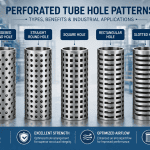
Different perforation patterns are engineered to meet specific performance requirements. A round hole pattern may provide excellent structural integrity, while a slotted design delivers superior continuous flow for sand control or water filtration. Likewise, hexagonal and square hole patterns offer larger open areas for applications requiring maximum ventilation or material separation.
Whether you’re designing filter elements, selecting support tubes for industrial filtration, or sourcing custom perforated tubing, understanding how each hole pattern performs helps you achieve better efficiency, lower maintenance costs, and longer service life.
In this comprehensive guide, we’ll explore the most common What Is a Perforated Tube and How Does It Work, compare their advantages, discuss industrial applications, and explain how to select the best option based on operating conditions, material selection, and industry standards.
What Are Perforated Tube Hole Patterns?
Perforated tube hole patterns refer to the geometric arrangement of holes punched, laser cut, or mechanically perforated into a metal tube. These patterns determine the distribution of open area across the tube surface and play a significant role in controlling fluid flow, filtration performance, drainage, and structural stability.
A perforated tube is manufactured by creating precisely spaced holes in metal sheets before they are rolled and welded into cylindrical tubes, or by perforating an already formed tube using specialized equipment. Modern CNC punching machines and laser cutting systems allow manufacturers to achieve exceptional accuracy, ensuring consistent hole size, spacing, and alignment.
Hole patterns are far more than a visual feature—they are an essential engineering parameter. The correct perforation layout balances open area with mechanical strength, enabling the tube to withstand pressure while allowing the required volume of liquid, gas, or air to pass through.
In industrial filtration systems, perforated tubes frequently serve as support cores for filter media, protecting cartridges from collapse under differential pressure while maintaining unrestricted flow. In other applications, they function as screening devices, ventilation components, drainage systems, or structural reinforcement elements.
Why Hole Patterns Matter
The performance of a perforated tube depends largely on its hole pattern. Even when two tubes share identical dimensions and materials, differences in perforation design can produce significantly different operational results.
Open Area
Open area refers to the percentage of the tube surface occupied by holes. Higher open area generally allows greater fluid or air passage while reducing resistance. However, increasing open area also removes more material, which can reduce structural strength if not carefully engineered.
Flow Rate
Hole geometry directly affects flow capacity. Larger openings or optimized staggered layouts enable higher flow rates, making them suitable for high-volume filtration, drainage, and ventilation systems.
Pressure Drop
Proper perforation patterns reduce pressure loss across the tube by minimizing flow restrictions. Lower pressure drop improves system efficiency, reduces energy consumption, and extends equipment life.
Mechanical Strength
The remaining metal between holes provides structural support. Straight patterns often offer predictable load distribution, while staggered layouts balance strength with larger open areas.
Filtration Efficiency
Hole size and spacing determine which particles are retained or supported. Although the filter media performs the primary filtration, the support tube’s perforation pattern ensures uniform flow distribution and prevents localized stress.
Weight Reduction
Removing material through perforation decreases component weight without significantly compromising performance. Lightweight tubes simplify installation, transportation, and equipment handling.
Durability
Well-designed perforation patterns distribute stress evenly across the tube surface, minimizing fatigue and extending operational life under demanding industrial conditions.
Product Lifespan
Optimized hole patterns reduce clogging, improve cleaning efficiency, and minimize mechanical wear, leading to lower maintenance costs and longer equipment service intervals.
Common Types of Perforated Tube Hole Patterns
Round Hole Pattern
Round hole perforations are the most widely used design across industrial applications due to their versatility, manufacturing efficiency, and balanced mechanical performance.
Characteristics
- Circular holes with uniform diameters
- Available in multiple spacing configurations
- Suitable for virtually every tube diameter
- Easy to manufacture with high precision
Advantages
- Excellent structural integrity
- Cost-effective production
- Consistent flow characteristics
- Broad compatibility with filtration systems
- Simplified maintenance
Applications
- Filter support tubes
- Industrial filtration
- HVAC systems
- Dust collectors
- Chemical processing
- Water treatment
- Food processing equipment
Staggered Round Hole Pattern
A staggered round hole pattern arranges holes in alternating rows, creating a triangular pitch that maximizes open area while maintaining excellent structural strength.
Characteristics
- Triangular hole arrangement
- High hole density
- Efficient material utilization
Advantages
- Highest open area among standard round-hole layouts
- Superior airflow and liquid flow
- Excellent strength-to-weight ratio
- Reduced pressure drop
- Uniform stress distribution
Best Industrial Uses
- High-flow filtration
- Oil and gas filtration
- Water treatment plants
- Industrial air filtration
- Chemical processing
- Heavy-duty filter elements
Straight Round Hole Pattern
Straight round perforations align holes in parallel rows and columns.
Characteristics
- Uniform alignment
- Symmetrical appearance
- Predictable manufacturing process
Advantages
- Easier inspection
- Precise alignment
- Excellent dimensional consistency
- Simplified fabrication
Typical Applications
- Architectural components
- Machine guards
- Support cylinders
- Ventilation systems
- Light-duty industrial filtration
Square Hole Pattern
Square perforations provide larger open areas than many circular configurations and are commonly used where material separation is important.
Characteristics
- Uniform square openings
- Large effective opening area
- Straight edge geometry
Advantages
- Improved screening efficiency
- Better separation of granular materials
- High throughput
- Efficient airflow
Common Uses
- Mining screens
- Agricultural processing
- Grain handling
- Material classification
- Recycling systems
Rectangular Hole Pattern
Rectangular perforations are designed for specialized industrial applications requiring directional flow or unique separation characteristics.
Characteristics
- Elongated openings
- Variable aspect ratios
- Custom spacing options
Advantages
- High flow capacity
- Improved directional drainage
- Specialized particle separation
- Custom engineering flexibility
Industrial Examples
- Conveyor systems
- Industrial drying equipment
- Material handling
- Custom filtration solutions
Slotted Hole Pattern
Slotted perforated tubes feature narrow elongated openings that provide continuous flow paths while maintaining mechanical strength.
Characteristics
- Long narrow slots
- Continuous fluid passage
- Multiple slot width options
Advantages
- Excellent sand control
- High flow efficiency
- Reduced clogging
- Superior drainage performance
Common Applications
- Oil and gas wells
- Water wells
- Groundwater extraction
- Water treatment systems
- Industrial filtration
- Dewatering equipment
Hexagonal Hole Pattern
Hexagonal perforations maximize open area while maintaining a lightweight structure.
Characteristics
- Honeycomb arrangement
- Dense hole distribution
- Efficient material usage
Advantages
- Maximum ventilation
- Lightweight construction
- Excellent airflow
- Attractive appearance
- High open area percentage
Applications
- Ventilation equipment
- Acoustic panels
- Lightweight structural components
- Decorative industrial products
- Heat exchange systems
Custom Hole Patterns
Many industrial applications require perforation designs that cannot be achieved using standard layouts. Experienced manufacturers offer fully customized hole patterns tailored to specific operating requirements.
Custom solutions may include:
- Non-standard hole diameters
- Variable spacing
- Mixed hole geometries
- Multi-pattern perforations
- Gradient open areas
- Precision laser-cut designs
- Industry-specific configurations
OEM customization allows engineers to optimize flow characteristics, structural performance, and filtration efficiency while meeting exact project specifications.
Comparison of Perforation Patterns
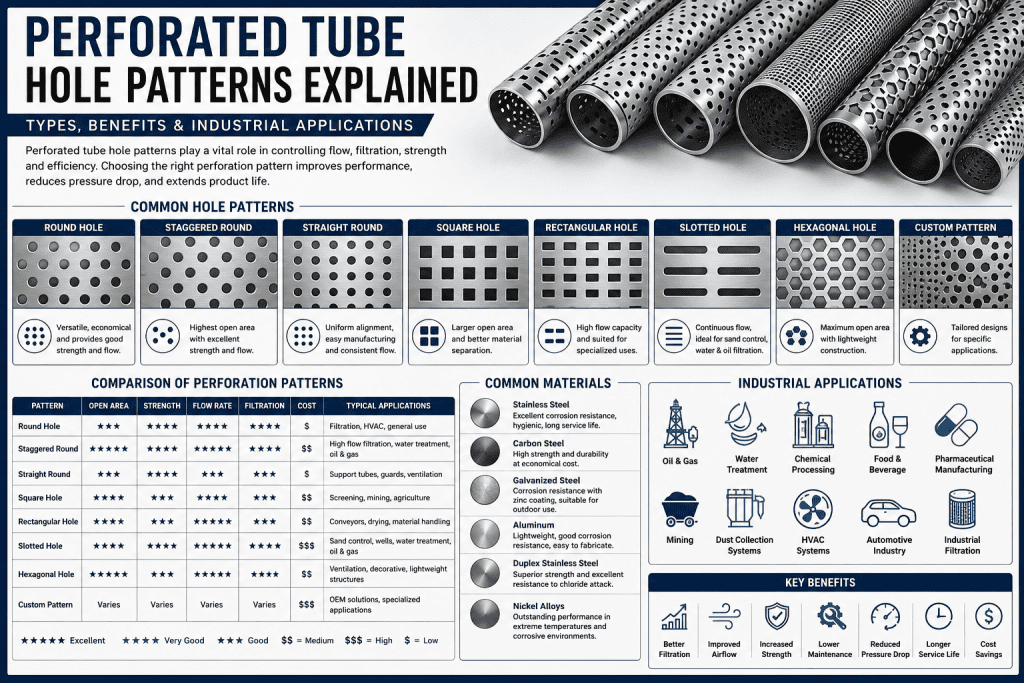
The table below summarizes the key characteristics of the most common perforated tube hole patterns. While exact performance depends on hole size, pitch, tube diameter, and material, these general comparisons can help engineers and buyers identify the most suitable design.
| Pattern | Open Area | Strength | Flow Rate | Filtration Performance | Relative Cost | Typical Applications |
| Round Hole | Medium | Excellent | High | Excellent | Low | General industrial filtration, support tubes, HVAC |
| Staggered Round | Very High | Excellent | Very High | Excellent | Medium | Filter elements, water treatment, oil & gas |
| Straight Round | Medium | Very Good | High | Very Good | Low | Machine guards, architectural components, support tubes |
| Square Hole | High | Good | High | Good | Medium | Material screening, mining, agriculture |
| Rectangular Hole | High | Good | Very High | Specialized | Medium-High | Drying systems, conveyors, custom filtration |
| Slotted Hole | High | Very Good | Very High | Excellent | High | Water wells, sand control, oil & gas |
| Hexagonal Hole | Maximum | Moderate | Maximum | Good | Medium | Ventilation, lightweight structures, decorative panels |
| Custom Pattern | Application Specific | Application Specific | Application Specific | Optimized | Varies | OEM industrial equipment and specialized filtration |
Each pattern offers a unique balance between open area, structural integrity, and flow characteristics. Selecting the right option requires evaluating operating conditions rather than focusing on a single performance metric.
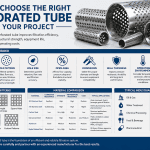
Choosing the Right Hole Pattern
Selecting the optimal perforation pattern involves more than simply choosing the largest open area. Engineers must balance flow performance, mechanical strength, durability, and manufacturing requirements to ensure reliable long-term operation.
Application Requirements
Start by defining the primary purpose of the perforated tube. Is it intended for filtration, drainage, airflow, structural support, screening, or noise reduction? Different applications demand different perforation characteristics.
For example:
- Filter support tubes prioritize structural strength and uniform flow.
- Sand control tubes require narrow slot openings.
- Ventilation systems benefit from high open-area designs.
- Material screening applications often use square perforations.
Material Type
The material selected influences manufacturing methods, corrosion resistance, strength, and service life.
Certain perforation patterns perform better in stainless steel, while others are more economical in carbon steel or galvanized steel.
Material selection should always consider:
- Operating temperature
- Chemical exposure
- Moisture
- Corrosion risk
- Mechanical loads
Hole Diameter
Hole diameter directly affects:
- Particle retention
- Flow capacity
- Pressure loss
- Tube rigidity
Small holes improve support for fine filtration media, whereas larger holes maximize airflow and liquid throughput.
Open Area Percentage
Open area determines how much of the tube surface allows flow.
Higher open area generally provides:
- Better airflow
- Higher liquid flow
- Lower pressure drop
- Improved drainage
However, excessive open area may reduce structural strength, especially under high differential pressure.
Pressure Conditions
Industrial filtration systems frequently operate under significant pressure.
High-pressure applications often require:
- Smaller perforations
- Stronger tube walls
- Optimized staggered layouts
- Higher-strength materials
Proper engineering prevents tube deformation and collapse.
Flow Requirements
Flow rate is one of the primary design considerations.
Applications requiring high throughput typically benefit from:
- Staggered round holes
- Slotted perforations
- Large open-area designs
Lower-flow systems may prioritize strength over maximum flow.
Structural Strength
Removing metal reduces weight but also decreases strength.
When tubes must withstand compression or heavy mechanical loads, manufacturers often recommend:
- Round perforations
- Optimized staggered layouts
- Increased wall thickness
- Higher-strength alloys
Corrosion Environment
Operating conditions significantly influence material and hole pattern selection.
Aggressive environments such as:
- Seawater
- Chemical processing
- Offshore platforms
- Wastewater treatment
typically require corrosion-resistant materials such as stainless steel, duplex stainless steel, or nickel alloys.
Industry Standards
Reputable manufacturers design perforated tubes to meet internationally recognized standards, including:
- ASTM material specifications
- ISO quality management requirements
- ASME pressure equipment and engineering standards
Compliance ensures consistent quality, dimensional accuracy, and dependable performance across industrial applications.
Common Materials Used
The same perforation pattern can perform differently depending on the material used. Selecting the appropriate alloy is essential for achieving the desired balance of corrosion resistance, strength, machinability, and service life.
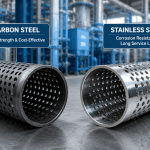
Stainless Steel
Stainless steel is the most widely used material for industrial perforated tubes due to its excellent corrosion resistance, high strength, and long service life.
Common grades include:
- 304 Stainless Steel
- 316 Stainless Steel
- 316L Stainless Steel
Typical applications include:
- Food processing
- Pharmaceutical manufacturing
- Water treatment
- Chemical plants
- Industrial filtration
Carbon Steel
Carbon steel offers excellent strength at a lower cost.
It is commonly selected for:
- Dust collection
- Machinery
- Mining
- General industrial equipment
Protective coatings are often applied to improve corrosion resistance.
Galvanized Steel
Galvanized steel combines the strength of carbon steel with a protective zinc coating.
Advantages include:
- Improved corrosion resistance
- Lower cost than stainless steel
- Good outdoor durability
Typical applications include HVAC systems, ventilation ducts, and construction equipment.
Aluminum
Aluminum perforated tubes are lightweight and naturally corrosion resistant.
Common uses include:
- Aerospace
- Automotive
- Ventilation
- Heat exchangers
Their low weight also reduces installation costs.
Duplex Stainless Steel
Duplex stainless steel provides outstanding mechanical strength and exceptional resistance to chloride corrosion.
It is frequently used in:
- Offshore platforms
- Marine environments
- Desalination plants
- Oil & gas production
Nickel Alloys
Nickel-based alloys are engineered for the harshest operating environments.
These materials withstand:
- High temperatures
- Strong acids
- Corrosive chemicals
- Extreme pressure
They are commonly used in aerospace, chemical processing, and power generation.
Material Comparison Table
| Material | Corrosion Resistance | Strength | Cost | Common Industries |
| Stainless Steel 304 | Excellent | High | Medium | Food, filtration, HVAC |
| Stainless Steel 316 | Outstanding | High | Medium-High | Marine, chemical processing |
| Carbon Steel | Moderate | Very High | Low | Mining, machinery, dust collection |
| Galvanized Steel | Good | High | Low-Medium | Construction, ventilation |
| Aluminum | Very Good | Moderate | Medium | Automotive, aerospace |
| Duplex Stainless Steel | Exceptional | Very High | High | Offshore, oil & gas |
| Nickel Alloys | Exceptional | Excellent | Very High | Chemical plants, aerospace, power generation |
Proper material selection is just as important as choosing the right hole pattern. Together, they determine the perforated tube’s durability, filtration performance, and total lifecycle cost.
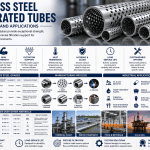
Industrial Applications of Perforated Tube Hole Patterns
Different industries require different perforated tube hole patterns depending on operating pressure, flow characteristics, filtration accuracy, and environmental conditions. Selecting the appropriate pattern improves equipment efficiency, minimizes maintenance, and extends service life.
Oil & Gas
The oil and gas industry relies heavily on perforated tubes for filtration, well completion, sand control, and fluid processing. Tubes must withstand high pressure, corrosive media, and abrasive particles while maintaining consistent flow.
Common hole patterns:
- Slotted hole pattern
- Staggered round hole pattern
Typical applications:
- Sand control screens
- Filter cartridges
- Separator vessels
- Downhole completion equipment
- Pipeline filtration
Water Treatment
Water treatment facilities use perforated tubes as support cores for filter cartridges and media beds. Proper hole patterns ensure uniform water distribution while reducing pressure loss.
Common hole patterns:
- Staggered round
- Straight round
Applications include:
- Reverse osmosis pre-filtration
- Activated carbon filters
- Municipal water treatment
- Industrial wastewater systems
- Desalination plants
Chemical Processing
Chemical processing environments often involve aggressive chemicals, high temperatures, and continuous operation. Perforated tubes support filter media while maintaining chemical compatibility.
Preferred materials:
- Stainless steel 316L
- Duplex stainless steel
- Nickel alloys
Recommended patterns:
- Round holes
- Staggered round holes
- Custom perforations
Food & Beverage
Food processing equipment requires hygienic, corrosion-resistant perforated tubes that comply with strict sanitation standards.
Typical applications include:
- Beverage filtration
- Sugar processing
- Dairy production
- Brewing systems
- Edible oil filtration
Stainless steel round-hole patterns are commonly used because they are easy to clean and provide consistent flow.
Pharmaceutical Manufacturing
Pharmaceutical production demands precise filtration and contamination control.
Perforated tubes support high-performance filter media in:
- Sterile filtration systems
- Process vessels
- Cleanroom equipment
- Water purification systems
Laser-cut custom perforation patterns are often selected for precision manufacturing.
Mining
Mining operations handle abrasive materials that require robust screening and filtration equipment.
Common applications include:
- Dewatering equipment
- Ore screening
- Slurry filtration
- Dust collection
Square and rectangular hole patterns are frequently chosen because they improve material separation and handling efficiency.
Dust Collection Systems
Industrial dust collectors use perforated tubes to support filter bags and cartridges while allowing unrestricted airflow.
Advantages include:
- Reduced pressure drop
- Uniform airflow
- Increased filter life
- Improved cleaning efficiency
Staggered round hole patterns are widely preferred due to their excellent balance of strength and open area.
HVAC Systems
Heating, ventilation, and air-conditioning equipment uses perforated tubes for:
- Air diffusers
- Ventilation systems
- Acoustic components
- Air filtration
Round and hexagonal hole patterns improve airflow while reducing system resistance.
Automotive Industry
Automotive manufacturers use perforated tubing in:
- Exhaust systems
- Catalytic converters
- Mufflers
- Intake filtration
- Emission control systems
Precision perforations improve gas flow while maintaining structural durability under vibration and high temperatures.
Industrial Filtration
Industrial filtration remains the largest application for perforated tubes.
They are widely used as support cores in:
- Filter cartridges
- Filter elements
- Basket filters
- Hydraulic filters
- Oil filtration systems
- Gas filtration equipment
Selecting the proper hole pattern directly affects flow distribution, filter performance, and equipment lifespan.
Advantages of Selecting the Correct Hole Pattern
Choosing the right perforated tube hole pattern delivers measurable improvements across nearly every aspect of industrial performance.
Better Filtration Performance
Optimized perforation layouts ensure even flow distribution across the filter media, reducing channeling and improving contaminant removal efficiency.
Improved Airflow
Higher open-area designs reduce airflow resistance, allowing ventilation and dust collection systems to operate more efficiently while lowering energy consumption.
Increased Structural Strength
Proper hole spacing preserves the tube’s mechanical integrity, enabling it to withstand high pressure, vibration, and heavy loads without deformation.
Lower Maintenance Requirements
Efficient perforation patterns reduce clogging and promote uniform flow, minimizing downtime and extending maintenance intervals.
Reduced Pressure Drop
Well-designed perforated tubes lower pressure losses, helping pumps and compressors operate more efficiently and reducing operating costs.
Longer Service Life
Balancing open area with structural strength minimizes mechanical stress and wear, extending the operational lifespan of both the tube and the surrounding filtration system.
Improved Equipment Efficiency
Optimized hole patterns enhance fluid distribution, reduce energy consumption, and improve the overall performance of industrial equipment.
Cost Savings
Selecting the correct perforation pattern from the beginning reduces replacement frequency, maintenance expenses, and unexpected production downtime, resulting in lower total lifecycle costs.
Common Mistakes to Avoid
Even high-quality perforated tubes may underperform if the wrong hole pattern is selected. Avoiding these common mistakes helps ensure long-term reliability and efficiency.
Choosing the Wrong Hole Diameter
Oversized holes may fail to provide adequate support for filter media, while undersized holes can unnecessarily restrict flow and increase pressure drop.
Ignoring Open Area
Selecting a perforation pattern based solely on appearance or cost without considering open area can negatively impact flow capacity and filtration performance.
Selecting the Wrong Material
Using carbon steel in corrosive environments or choosing an inappropriate alloy can lead to premature failure and higher maintenance costs.
Overlooking Operating Pressure
High-pressure applications require adequate structural strength. Choosing a pattern with excessive open area may weaken the tube and increase the risk of deformation.
Focusing Only on Initial Price
The least expensive perforated tube is not always the most economical solution. Long-term operating costs, maintenance, and service life should be considered alongside the purchase price.
Ignoring Corrosion Resistance
Environmental conditions such as moisture, chemicals, or salt exposure significantly affect material performance. Selecting corrosion-resistant materials where necessary reduces replacement costs and extends equipment life.
How Perforated Tube Manufacturers Customize Hole Patterns
Many industrial projects require customized perforated tubes designed to meet specific operating conditions. Experienced manufacturers offer flexible manufacturing capabilities to produce perforation patterns tailored to exact application requirements.
Common customization options include:
Custom Hole Sizes
Manufacturers can produce hole diameters ranging from extremely fine precision perforations to large openings for high-flow applications.
Custom Hole Spacing
Hole pitch can be adjusted to achieve the desired balance between open area, flow rate, and structural strength.
Staggered vs. Straight Layouts
Depending on the application, engineers may recommend staggered layouts for higher open area or straight layouts for easier alignment and fabrication.
Tube Dimensions
Custom manufacturing supports a wide range of:
- Tube diameters
- Wall thicknesses
- Lengths
- End configurations
Material Grades
Projects may require specialized materials such as:
- 304 Stainless Steel
- 316L Stainless Steel
- Duplex Stainless Steel
- Carbon Steel
- Aluminum
- Nickel Alloys
Surface Finishes
Manufacturers can also provide:
- Pickling and passivation
- Electropolishing
- Polished finishes
- Sandblasting
- Protective coatings
OEM Manufacturing Capabilities
Many perforated tube manufacturers support OEM and ODM production, offering:
- Engineering consultation
- Prototype development
- CAD design assistance
- Precision CNC punching
- Laser cutting
- Welding and fabrication
- Quality inspection
- Custom packaging
Working with an experienced manufacturer ensures the final perforated tube is optimized for performance, durability, and compliance with project specifications.
Frequently Asked Questions
1. What are perforated tube hole patterns?
Perforated tube hole patterns are the arrangement, size, shape, and spacing of holes manufactured into a perforated metal tube. These patterns determine the tube’s open area, flow capacity, structural strength, and filtration performance. Selecting the correct pattern is essential for achieving optimal results in industrial filtration, ventilation, drainage, and screening applications.
2. Which hole pattern offers the highest open area?
Among standard designs, staggered round and hexagonal hole patterns typically provide the highest open area. Staggered round perforations are widely preferred in industrial filtration because they combine high flow capacity with excellent structural strength.
3. What is the strongest perforation pattern?
Round hole patterns, particularly staggered round layouts, offer one of the best combinations of mechanical strength and open area. The remaining material is evenly distributed, allowing the tube to withstand higher loads and pressure.
4. Which hole pattern is best for filtration?
There is no single best pattern for every filtration application.
Generally:
- Staggered round holes provide excellent flow and support for filter media.
- Straight round holes are suitable for standard filtration systems.
- Slotted holes are ideal for sand control, well screens, and continuous-flow applications.
The optimal choice depends on the filtration media, particle size, flow rate, and operating pressure.
5. What is the difference between staggered and straight hole patterns?
A staggered hole pattern arranges holes in alternating rows, increasing the open area while maintaining strength. This design typically delivers better flow characteristics and lower pressure drop.
A straight hole pattern aligns holes in uniform rows and columns, making manufacturing and inspection simpler. It is often selected for applications requiring precise alignment or aesthetic consistency.
6. Can perforation patterns be customized?
Yes. Most professional perforated tube manufacturers offer custom perforation solutions, including:
- Custom hole diameters
- Unique hole shapes
- Variable spacing
- Mixed perforation patterns
- Tube dimensions
- Material grades
- Surface finishes
Custom designs help optimize performance for specialized industrial applications.
7. How do hole patterns affect flow rate?
Hole patterns directly influence the available open area through which fluids or gases can pass. Larger open areas generally increase flow capacity and reduce pressure drop, while smaller or more closely spaced holes provide greater structural support and improved filtration control.
8. Which industries use different perforation patterns?
Perforated tubes are widely used across many industries, including:
- Oil & Gas
- Water Treatment
- Chemical Processing
- Food & Beverage
- Pharmaceutical Manufacturing
- Mining
- HVAC
- Automotive
- Dust Collection
- Industrial Filtration
Each industry selects perforation patterns based on its unique flow, filtration, and structural requirements.
9. How do I choose the right perforation pattern?
Consider the following factors:
- Required flow rate
- Open area percentage
- Hole diameter
- Operating pressure
- Structural strength
- Corrosion environment
- Material selection
- Industry standards
- Maintenance requirements
Consulting an experienced manufacturer can help ensure the most suitable solution for your application.
10. What material is best for perforated tubes?
The best material depends on the operating environment:
- 304 Stainless Steel – General industrial applications
- 316 Stainless Steel – Marine and chemical environments
- Carbon Steel – Cost-effective structural applications
- Galvanized Steel – Outdoor and HVAC systems
- Aluminum – Lightweight equipment
- Duplex Stainless Steel – Offshore and aggressive environments
- Nickel Alloys – High-temperature and highly corrosive processes
Selecting the right material is just as important as choosing the correct perforation pattern.
Conclusion
Selecting the appropriate perforated tube is a critical step in designing efficient, durable, and cost-effective industrial filtration and processing systems. The size, shape, spacing, and arrangement of perforations directly affect flow rate, open area, pressure drop, structural strength, and overall equipment performance.
From versatile round hole perforated tubes and high-open-area staggered patterns to specialized slotted, square, and hexagonal designs, each perforation pattern offers distinct advantages for specific operating conditions and industries. Matching the right pattern with the proper material—whether stainless steel, carbon steel, aluminum, duplex stainless steel, or nickel alloys helps maximize reliability while minimizing maintenance and lifecycle costs.
For projects with unique technical requirements, custom perforation solutions provide the flexibility to optimize tube dimensions, hole geometry, spacing, and material selection for superior performance.
If you’re evaluating perforated tubes for filtration, screening, ventilation, or structural support, working with an experienced manufacturer ensures your solution meets the required performance standards, complies with ASTM, ISO, and ASME guidelines, and delivers long-term operational value.