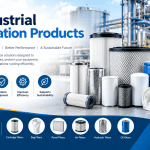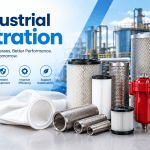
Every factory, power plant, refinery and processing line depends on clean fluids and gases, even if nobody on the shop floor talks about it. A single particle of scale in a hydraulic line, a bit of debris in a water loop, or a contaminant in a chemical stream can quietly damage machinery, spoil a batch or trigger an unplanned shutdown. That is exactly why industrial filtration matters so much.
In this guide we explain what industrial filtration is, why it is essential across industries, how industrial water filters and components such as the perforated tube support it, and what to look for when you choose a supplier. The insights below reflect commonly accepted engineering practice and the type of components handled by an Industrial Filter Components Manufacturer such as Xintan Filter.
What is Industrial Filtration?
Industrial filtration is the process of separating unwanted solids, particles, oils or other contaminants from liquids and gases used in industrial operations. It relies on a filter medium, such as mesh, wire cloth, sintered material or filter paper, supported by a rigid structure that keeps the element stable under pressure, temperature and flow.
Depending on the application, filtration may protect water systems, hydraulic and lubrication circuits, compressed air lines, fuel systems, chemical processes or food and beverage production. The principle is the same everywhere: keep the process fluid clean so that machines, products and people are protected.
Why Industrial Filtration is Important
1. It Protects Expensive Equipment
Pumps, valves, nozzles, heat exchangers and hydraulic components are built with tight tolerances. Abrasive particles wear these parts down, clog small passages and cause leaks. Effective industrial filtration removes these contaminants before they reach sensitive equipment, which extends service life and reduces breakdowns.
2. It Keeps Product Quality Consistent
In pharmaceuticals, food processing, chemicals and coatings, even minor contamination can lead to rejected batches or customer complaints. Reliable filtration helps manufacturers meet specifications and deliver the same quality every time.
3. It Improves Safety and Regulatory Compliance
Many sectors must comply with standards for water quality, emissions and product safety. Filtration helps keep discharge, process water and finished goods within the required limits. It also lowers safety risks, since blocked lines and failing components can cause pressure spikes, leaks or fires in demanding environments.
4. It Reduces Operating and Maintenance Costs
Unplanned downtime is usually far more expensive than a filter element. When contaminants are removed early, maintenance becomes predictable instead of reactive. Well-chosen filtration also supports better energy efficiency, because clean systems need less effort to move fluid through them.
5. It Supports Environmental Responsibility
Filtration allows industries to recover, reuse and safely discharge water and process fluids. Cleaner effluent and less waste help facilities reduce their environmental impact and meet sustainability goals.
Industries That Depend on Industrial Filtration
Filtration is not limited to one sector. Some of the most common users include:
- Water and wastewater treatment: for removing sediment, debris and suspended solids.
- Oil, gas and petrochemical: for protecting pumps, pipelines and process units.
- Power generation: for cooling water, lubrication and fuel systems.
- Food and beverage: for clarifying liquids and maintaining hygiene.
- Pharmaceutical and chemical: for purity and process control.
- Automotive and heavy machinery: for hydraulic, fuel and lubrication circuits.
Role of Industrial Water Filters
Water is used in cooling, cleaning, boiler feed, mixing and countless other processes. Untreated water carries sand, rust, scale and organic matter that can foul heat exchangers, corrode pipes and damage pumps. Industrial water filters remove these impurities at different stages, from coarse pre-filtration to fine polishing.
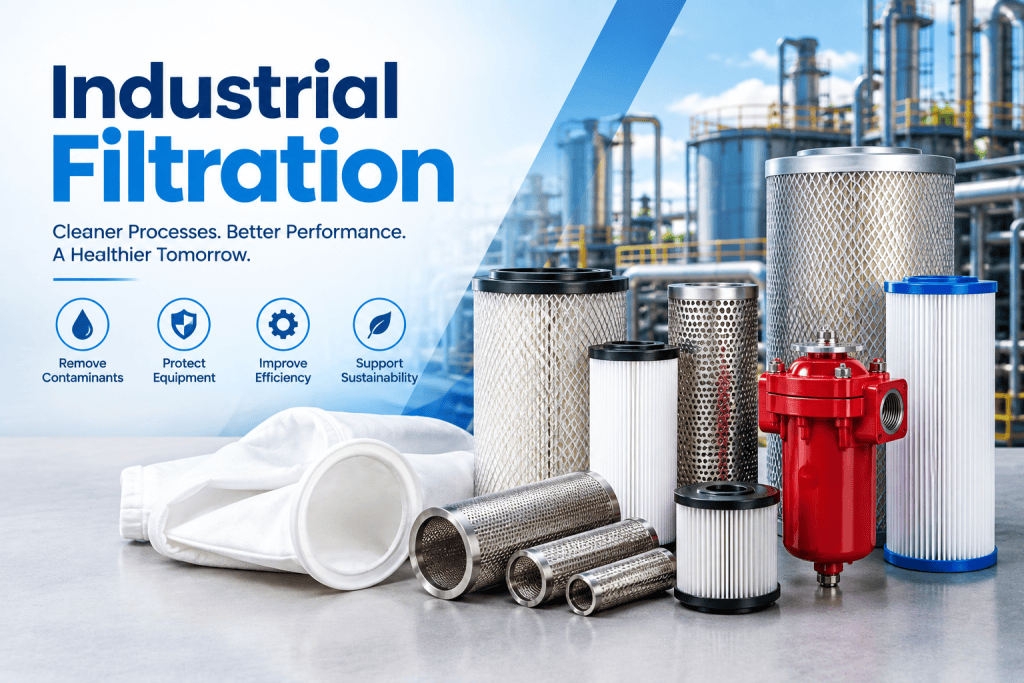
Common designs include basket strainers, cartridge filters, bag filters and candle-type or tubular elements. Each has its own place, but all of them need a strong internal or external support structure. This is where the perforated tube becomes essential.
What is a Perforated Tube and Why Does It Matter?
A perforated tube is a metal tube with precisely punched holes in a defined pattern. In a filter, it acts as the core or support cage that holds the filter media in place. The holes let fluid pass through freely, while the solid sections of the tube give the element the strength to resist internal and external pressure without collapsing.
Without a well-made perforated tube, even the best filter media can deform, bypass or fail. The hole size, open area percentage, wall thickness and weld quality all influence flow rate, pressure drop and filter life.
Why Stainless Steel is the Preferred Material
A stainless steel perforated filter tube is widely chosen for demanding applications because stainless steel offers several practical advantages:
- Corrosion resistance: suitable for water, mild chemicals and humid or marine environments, depending on the grade.
- Strength and durability: handles high pressure, vibration and repeated cleaning cycles.
- Temperature tolerance: performs well in both hot and cold process conditions.
- Hygiene: smooth, non-porous surfaces are easier to clean, which matters in food and pharmaceutical use.
- Long service life: a robust tube can often be reused across several media changes.
Common grades include 304 and 316L. Grade 316L is generally preferred where chlorides or aggressive chemicals are present, while 304 is a cost-effective choice for many general applications. The right grade should always be confirmed against your operating conditions.
How to Choose a Reliable Industrial Filter Components Manufacturer
The quality of a filtration system is only as good as the components inside it. When evaluating an Industrial Filter Components Manufacturer, consider the following:
- Material quality and traceability: ask for material certificates and confirm the stainless steel grade.
- Customization capability: look for control over diameter, length, hole pattern, open area and end fittings.
- Manufacturing precision: consistent perforation, clean welds and tight dimensional tolerances prevent leaks and bypass.
- Quality control: inspection and testing should be part of the production process.
- Industry experience: a supplier who understands your application can suggest better designs, not just fulfil drawings.
- Support and delivery: clear communication, technical guidance and dependable lead times keep your project on schedule.
Best Practices for Getting the Most From Your Filtration System
- Match the filter rating and media to the contaminants you actually need to remove.
- Monitor pressure drop across the filter; a steady rise signals loading and the need for cleaning or replacement.
- Inspect perforated tubes and support cages regularly for dents, corrosion or weld damage.
- Follow a scheduled maintenance plan instead of waiting for failures.
- Choose components designed for your temperature, pressure and chemical conditions.
Frequently Asked Questions
Is industrial filtration only necessary for large factories?
No. Small and mid-sized operations also face wear, contamination and quality issues. The scale of the system may differ, but the reasons for filtering remain the same.
How often should filter components be replaced?
It depends on the contaminant load, flow rate and operating conditions. Tracking pressure drop and inspecting elements at regular intervals is more reliable than relying on a fixed calendar.
Can a perforated tube be customized?
Yes. Diameter, length, wall thickness, hole size, pattern and end finishing can usually be tailored to match the filter design and application.
Conclusion
Industrial filtration protects equipment, safeguards product quality, supports safety and compliance, lowers operating costs and helps industries work more responsibly. From industrial water filters to specialized cartridges and candle elements, every system depends on strong, accurately built components. The perforated tube, especially a well-made stainless steel perforated filter tube, provides the structural backbone that lets filter media perform reliably under real working conditions.
Ready to improve your filtration performance? Partner with a trusted Industrial Filter Components Manufacturer. Contact the team at Xintan Filter today to discuss your requirements, request customized stainless steel perforated filter tubes and get expert support for your application.