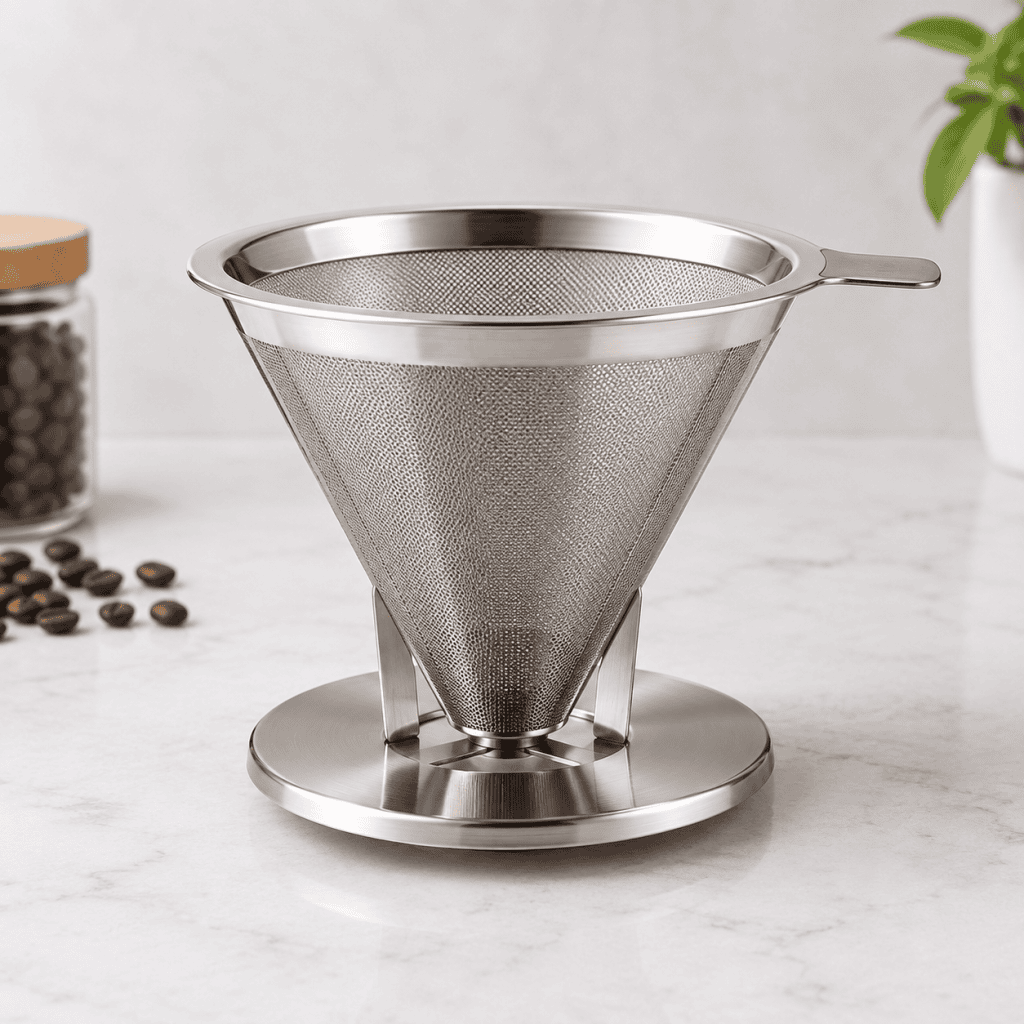
At first glance, a stainless steel cone filter dripper appears very similar to a typical pour-over cone; however, when you use this device for brewing, your final product will be different from what you would expect from using a disposable paper filter. Unlike a paper filter which must be replaced after each use, the cone itself contains a fine metal mesh which is permanently attached to the dripper. The purpose of this article is to explain how a steel cone filter dripper functions, the proper method for brewing with this type of equipment, and how it compares to paper-based pour-overs.
What is an Stainless Steel Cone Filter Dripper?
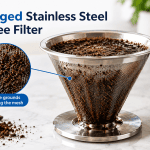
A steel cone filter dripper is a pour over coffee brewing system that uses a stainless steel cone filter. The cone filter acts as both the filter and the container for your coffee grounds; you do not need to use a disposable paper filter. After placing your coffee grounds in the steel cone, you can pour hot water directly on top of the coffee grounds.
As the hot water runs through the coffee grounds, it will pass through the stainless steel mesh of the cone filter and fall into either a mug or carafe below. Since the dripper and cone filter are one reusable piece of equipment, there are no additional costs or wastes associated with replacing the filter each time you make coffee.
How Stainless Steel Filters Work During Brewing
The mechanics are simple, but each stage matters for how the final cup tastes:
1. Water Passes Through a Wider Mesh Than Paper
A stainless steel mesh cone has significantly larger openings than paper fiber, typically in the range of 40 to 190 microns depending on the weave. This means the filter blocks large coffee grounds but allows natural oils and a small amount of fine sediment to pass straight into the cup, something paper filters largely trap.
2. Oils and Body Come Through, Not Just Water
Because those oils carry much of coffee aroma and flavor compounds, a cup brewed through a steel cone tastes noticeably heavier and more full-bodied than the same coffee brewed through paper. This is the single biggest reason people switch to steel cone drippers — the flavor difference is immediate and easy to notice.
3. Flow Rate Depends on Mesh Fineness
A tighter mesh slows water down slightly, giving more contact time with the grounds and a cleaner cup. A more open mesh lets water move faster, producing a bolder cup with a bit more sediment. Manufacturing precision matters here, a mesh with inconsistent spacing lets more water rush through some areas than others, leading to uneven extraction.
How to Brew With a Stainless Steel Cone Filter Dripper
- Use a medium to medium-coarse grind, a fine grind made for paper will slip through the wider steel mesh and leave gritty sediment.
- Rinse the cone with hot water before brewing to clear any faint metallic taste and pre-warm the dripper.
- Bloom the grounds with a small amount of water for 30 seconds before the full pour, to release trapped gas evenly.
- Pour in slow, steady circles rather than a single stream, to keep extraction even across the bed of grounds.
- Rinse the mesh immediately after brewing, since coffee oils harden quickly once they dry.
Paper vs Steel Coffee Filters: Key Differences
Paper filters trap almost all sediment and oil, producing a lighter, cleaner cup. A steel cone lets more through, producing a fuller, heavier cup with a small amount of fine grit that some coffee drinkers actually prefer, describing it as closer to French press in body. The trade-off is ongoing: paper is simpler and gives more clarity per cup, while steel eliminates recurring filter costs and waste but needs a quick rinse and occasional deeper clean to prevent oil buildup.
Why Manufacturing Precision Matters in a Metal Filter
A mesh cone’s performance comes down to how consistently its openings are manufactured. This is the same underlying discipline used across industrial filtration products generally, controlling hole size, weave density, and structural tolerance on a metal surface. A poorly manufactured cone can have uneven mesh spacing that lets more sediment through in some spots than the stated specification suggests, the same quality issue that experienced industrial filter manufacturers work to eliminate in components built for continuous industrial use rather than a countertop coffee brew.
This is worth knowing because it explains why two steel cone drippers that look identical can perform differently, one built with tighter manufacturing tolerances will hold its rated mesh spacing evenly across the entire cone, while a cheaper, inconsistent weave will let sediment through unevenly regardless of what the packaging claims.
Cleaning and Maintenance
Rinse the cone under hot water immediately after each use to prevent oils from hardening on the mesh. Every couple of weeks, soak it in warm water with a small amount of baking soda to lift built-up residue that a quick rinse alone won’t remove. Avoid metal brushes or abrasive scrubbers, which can distort the fine mesh and change its effective micron rating over time.
FAQs
Does a stainless steel cone filter dripper change the caffeine level of coffee?
No, caffeine extraction is driven mainly by water temperature, grind size, and brew time, not the filter material itself. The filter changes body and clarity, not caffeine content.
Why does my coffee taste metallic the first few uses?
A faint metallic note is common with a brand-new steel filter and typically fades after the first couple of washes, once any manufacturing residue clears from the mesh.
Can I use any grind size with a steel cone dripper?
A medium to medium-coarse grind works best. Very fine grinds made for paper filters will pass through the wider steel mesh and leave excess sediment in the cup.
How long does a stainless steel cone dripper last?
With regular rinsing and occasional deeper cleaning, a well-made steel mesh cone can last for years, since there’s no paper to replace and stainless steel resists corrosion under normal use.
Conclusion
A stainless steel cone filter dripper trades some of the clarity of paper filtration for a fuller-bodied cup and zero ongoing filter costs. Getting good results comes down to a slightly coarser grind, a steady pour, and regular rinsing to keep the mesh performing the way it’s meant to. And just like any precision metal component, how well the mesh was manufactured, consistent hole spacing, tight tolerances, determines whether it performs the way its specifications promise, cup after cup.
Interested in precision-manufactured stainless steel mesh and filtration components for other applications? Explore our industrial filtration products here: https://xintanfilter.com/