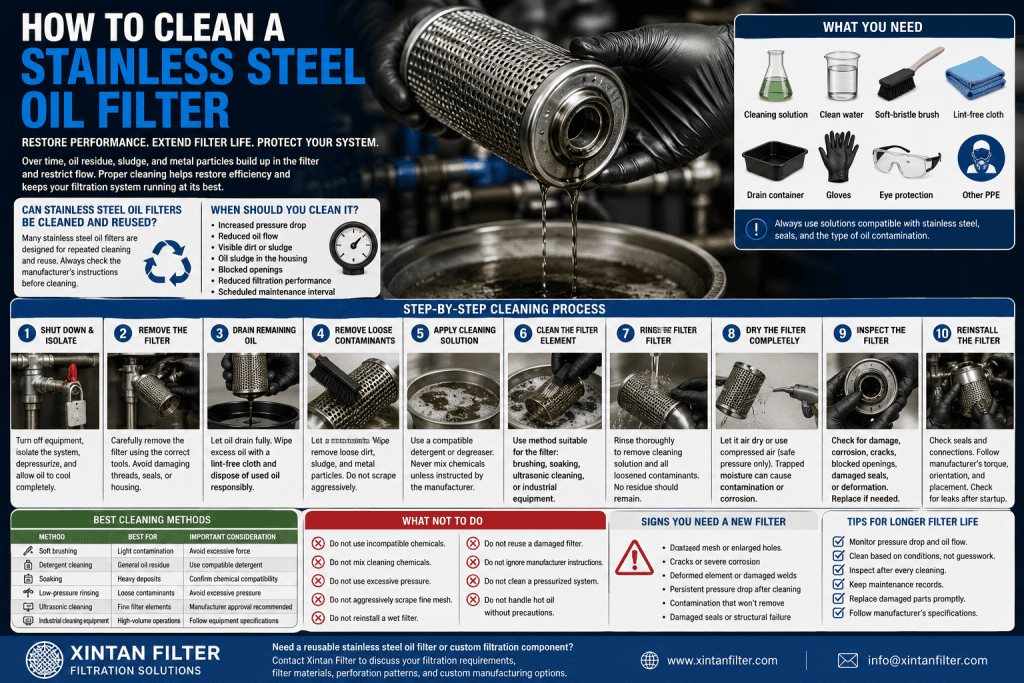
To clean a reusable stainless steel oil filter, first isolate and cool the system, remove and drain the filter, remove loose contaminants, wash it with a compatible cleaning solution, rinse thoroughly, dry completely, and inspect it for damage before reinstalling it.
Over time, even the toughest stainless steel oil filter accumulates oil residue, sludge, dirt, and fine metal particles as it does its job. This buildup gradually restricts flow and increases pressure drop across the element, which is why learning how to clean a stainless steel oil filter properly is an essential skill for anyone responsible for keeping filtration systems running efficiently. Cleaning can help restore flow and remove contamination, but it’s not a guarantee the right method depends heavily on how the filter is constructed and what the manufacturer recommends. This guide walks through the process step by step, along with the tools, techniques, and precautions that keep both the filter and the technician safe.
Can Stainless Steel Oil Filters Be Cleaned and Reused?
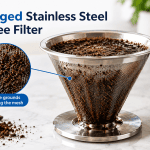
Many stainless steel oil filters are built specifically to be cleaned and reused many times, which is one of the main advantages of metal filter media over disposable paper or synthetic cartridges. Woven mesh, sintered mesh, and perforated filter elements are typically more durable and better suited to repeated cleaning cycles than fiber-based media, which tends to break down when washed.
That said, not every stainless steel oil filter is designed for cleaning and reuse. Some are built as single-use components, and attempting to clean and reinstall them could compromise filtration performance or damage the element. Before cleaning any filter, check the manufacturer’s documentation to confirm whether the specific model is rated as reusable, and follow any cleaning instructions provided.
It’s also worth remembering that a filter’s condition matters as much as its design. A reusable stainless steel filter element that is heavily corroded, torn, or structurally deformed may no longer be a good candidate for cleaning, even if the material itself can technically withstand it. In those cases, replacement is the safer and more reliable option.
When Should You Clean a Stainless Steel Oil Filter?
Knowing when to clean a filter is just as important as knowing how. Common signs that a stainless steel oil filter may need attention include:
- Increased pressure drop across the filter
- Reduced oil flow through the system
- Visible dirt, sludge, or debris on the filter surface
- Oil sludge accumulation inside the housing
- Blocked or partially blocked filter openings
- Noticeably reduced filtration performance
- A scheduled maintenance interval coming due
Cleaning intervals are not one-size-fits-all. How often a stainless steel oil filter needs cleaning depends on factors such as:
- The type of oil being filtered
- The level of contamination in the system
- Operating temperature
- Operating pressure
- Filtration requirements for the application
- How heavily the equipment is used
- The manufacturer’s recommended maintenance schedule
Because these variables differ from one installation to the next, many facilities monitor pressure drop and flow rate rather than relying solely on a fixed calendar schedule.
What You Need Before Cleaning a Stainless Steel Oil Filter
Having the right materials on hand before you start makes the cleaning process smoother and safer. A typical checklist includes:
- A cleaning solution suitable for stainless steel and the type of contamination present
- Clean water, where rinsing with water is appropriate
- A soft-bristle brush
- A lint-free cloth
- A suitable container for draining oil and holding the filter
- Gloves
- Eye protection
- Any other appropriate PPE for the work environment
- Drying equipment, where permitted by the manufacturer
Before using any cleaning product, confirm that it’s compatible with the stainless steel grade, the filter media, any seals or gaskets, and the type of oil contamination you’re dealing with. Using the wrong solution can weaken seals, degrade fine mesh, or leave residue that interferes with filtration.
How to Clean a Stainless Steel Oil Filter Step by Step
Follow these steps in order, and always defer to the equipment and filter manufacturer’s specific instructions where they differ from general guidance.
Step 1: Shut Down and Isolate the Equipment
Safety comes first. Turn off the equipment and isolate the filter from the rest of the system before doing anything else. Depressurize the system if it’s under pressure, and allow hot oil and components to cool completely before handling them. Hot oil and pressurized lines are among the most common causes of injury during filter maintenance, so don’t skip this step even if the job seems routine.
Step 2: Remove the Oil Filter
Carefully remove the filter following the equipment manufacturer’s instructions. Work slowly and use the correct tools to avoid damaging threads, seals, the filter housing, the filter element itself, or any connecting fittings. Forcing a stuck filter can crack housings or strip threads, creating a bigger repair job than the one you started with.
Step 3: Drain Remaining Oil
Place the filter over an appropriate container and allow any trapped oil to drain fully. Once draining slows, wipe away excess oil with a lint-free cloth. Dispose of used oil in accordance with your facility’s environmental and safety procedures.
Step 4: Remove Loose Contaminants
Before applying any cleaning solution, gently remove loose dirt, sludge, metal particles, dust, and other surface deposits. For mesh or perforated filter elements, gentle brushing is preferable to scraping — aggressive scraping can distort fine mesh openings or damage the perforation pattern, undermining the filter’s precision.
Step 5: Apply an Appropriate Cleaning Solution
For light contamination, a compatible detergent solution is often sufficient. Heavier oil deposits may call for an appropriate industrial degreaser rated for use on stainless steel. Whatever product you choose, it needs to be compatible with both the filter material and any seals.
Never mix cleaning chemicals unless the manufacturer specifically instructs you to do so.
Step 6: Clean the Filter Element
Depending on the filter’s construction and the manufacturer’s guidance, cleaning may involve:
- Manual cleaning
- Soft brushing
- Soaking in a compatible solution
- Controlled rinsing
- Ultrasonic cleaning
- Approved industrial cleaning equipment
There isn’t a single correct method for every filter the right approach depends on the element’s design and what the manufacturer recommends. Regardless of method, avoid excessive mechanical force, which can distort or tear fine mesh and perforated elements.
Step 7: Rinse the Filter
Rinse the filter thoroughly to remove detergent, degreaser, and any loosened contaminants. Make sure no cleaning residue remains on or inside the element, since leftover residue can affect oil quality and filtration performance. For sensitive industrial applications, follow the manufacturer’s specified rinse procedure exactly.
Step 8: Dry the Filter Completely
Let the filter dry fully before reinstalling it. Trapped moisture inside the element can contaminate oil or promote corrosion over time. Compressed air can be used to speed drying, but only when appropriate for the filter type and at a safe, controlled pressure excessive air pressure can damage delicate filter media just as easily as aggressive brushing can.
Step 9: Inspect the Filter
Before reinstalling, inspect the filter closely for:
- Mesh damage
- Cracks
- Corrosion
- Deformed or enlarged holes
- Blocked openings
- Damaged welds
- Excessive wear
- Seal damage
- Structural deformation
A filter shouldn’t be reused simply because it looks clean. Physical damage that affects filtration accuracy or structural integrity is a reason to replace it, regardless of how well it cleaned up.
Step 10: Reinstall the Filter
Check seals and connections before reinstalling. Follow the manufacturer’s specifications for torque, orientation, and placement. Once the system is back online, inspect the area for leaks to confirm everything is seated correctly.
Best Cleaning Methods for Stainless Steel Oil Filters
No single cleaning method works best for every situation. The right choice depends on the contamination level, the filter’s construction, and manufacturer guidance.
| Cleaning Method | Best For | Important Consideration |
| Soft brushing | Light contamination | Avoid excessive force |
| Detergent cleaning | General oil residue | Use compatible detergent |
| Soaking | Heavy deposits | Confirm chemical compatibility |
| Low-pressure rinsing | Loose contaminants | Avoid excessive pressure |
| Ultrasonic cleaning | Suitable fine filter elements | Manufacturer approval recommended |
| Industrial cleaning equipment | High-volume operations | Follow equipment specifications |
What Cleaning Solutions Can Be Used?
In general terms, acceptable cleaning solutions for a stainless steel filter element may include mild detergents, compatible degreasers, manufacturer-approved cleaning agents, and water-based cleaners where appropriate for the contamination type.
The correct solution for a given job depends on several factors:
- The stainless steel grade
- The filter’s construction
- The type of oil involved
- The seal material used
- The nature and severity of contamination
- Manufacturer instructions
Never mix cleaning chemicals together unless explicitly directed to by the manufacturer.
What NOT to Do When Cleaning a Stainless Steel Oil Filter
- Do not use incompatible chemicals.
- Do not mix cleaning chemicals.
- Do not use excessive pressure.
- Do not aggressively scrape fine mesh.
- Do not reinstall a wet filter.
- Do not reuse a damaged filter.
- Do not ignore manufacturer instructions.
- Do not clean a pressurized filter system.
- Do not handle hot oil without appropriate precautions.
How to Clean a Stainless Steel Oil Filter Without Damaging It
A few habits go a long way toward protecting a reusable stainless steel oil filter over its service life:
- Use soft cleaning tools rather than abrasive or metal implements.
- Choose cleaning agents confirmed compatible with the filter material.
- Avoid excessive mechanical force during brushing or rinsing.
- Take extra care with fine mesh, which is more delicate than it looks.
- Inspect the filter after every cleaning, not just occasionally.
- Dry the element completely before storage or reinstallation.
- Follow the manufacturer’s recommended cleaning process rather than improvising.
How Often Should a Stainless Steel Oil Filter Be Cleaned?
There’s no universal cleaning interval that applies to every stainless steel oil filter. Instead, cleaning frequency depends on a combination of factors:
- Oil cleanliness
- Contaminant load
- Operating conditions
- Pressure drop across the filter
- Flow rate through the system
- Equipment duty cycle
- Manufacturer recommendations
Many maintenance teams find that condition-based maintenance cleaning in response to measured pressure drop or flow reduction is more effective than relying solely on a fixed calendar schedule, since actual contamination rates can vary significantly between installations.
Signs That a Stainless Steel Oil Filter Needs Replacement
Cleaning isn’t always the answer. A stainless steel oil filter should be replaced rather than cleaned when it shows:
- Damaged mesh
- Enlarged holes
- Cracks
- Severe corrosion
- A deformed filter element
- Damaged welds
- Persistent pressure drop even after cleaning
- Contamination that cleaning can’t remove
- Damaged seals
- Structural failure
If cleaning doesn’t restore acceptable flow and pressure readings, or if physical inspection reveals damage, replacement protects both the filter’s performance and the equipment it’s protecting.
Stainless Steel Oil Filter Maintenance Tips
- Inspect the filter regularly, not just during scheduled cleanings.
- Monitor pressure drop across the element.
- Monitor oil flow rate.
- Clean according to the specific demands of your application.
- Inspect after every cleaning where appropriate.
- Keep records of maintenance activities.
- Replace damaged components promptly.
- Follow manufacturer specifications for both cleaning and installation.
Stainless Steel Oil Filter vs Disposable Oil Filter
| Feature | Stainless Steel Reusable Filter | Disposable Filter |
| Reusability | Designed for repeated cleaning where specified | Usually replaced |
| Cleaning | Required | Usually not applicable |
| Initial Cost | Application-dependent | Application-dependent |
| Maintenance | Cleaning and inspection | Replacement |
| Durability | Depends on design/material | Depends on media/design |
| Best Use | Applications requiring reusable filtration components | Applications designed for disposable media |
Which option makes more sense for a given application depends on operating conditions, maintenance capacity, and filtration requirements there’s no universal winner on cost or lifespan across every use case.
Frequently Asked Questions
Can you clean a stainless steel oil filter?
Many stainless steel oil filters are designed to be cleaned and reused, but this depends on the specific filter’s construction and the manufacturer’s instructions. Always confirm reusability before cleaning.
How do you clean a stainless steel oil filter?
Isolate and cool the system, remove and drain the filter, remove loose contaminants, apply a compatible cleaning solution, clean the element gently, rinse thoroughly, dry completely, and inspect before reinstalling.
Can stainless steel oil filters be reused?
Many are, particularly those with mesh, sintered, or perforated elements built for repeated cleaning cycles. However, not all stainless steel filters are designed for reuse, so manufacturer guidance should always be checked.
What is the best way to clean an oil filter?
The best method depends on the contamination level and filter construction. Light contamination often responds well to soft brushing and detergent, while heavier deposits may require soaking or approved industrial cleaning equipment.
Can you use water to clean a stainless steel oil filter?
Water-based cleaning can be appropriate in some cases, but it should only be used where compatible with the filter media, seals, and contamination type, and the filter must be dried completely afterward.
What cleaning solution is safe for stainless steel filters?
Mild detergents, compatible degreasers, and manufacturer-approved cleaning agents are generally suitable, provided they’re confirmed compatible with the stainless steel grade, filter media, and seals involved.
How often should a stainless steel oil filter be cleaned?
There’s no fixed interval. Cleaning frequency depends on oil cleanliness, contamination load, operating conditions, and manufacturer recommendations, with many facilities using pressure drop as a cleaning trigger.
How do you know when an oil filter needs replacement?
Signs include damaged mesh, cracks, severe corrosion, deformed elements, damaged welds or seals, and persistent pressure drop that doesn’t improve after cleaning.
Can ultrasonic cleaning be used for stainless steel oil filters?
Ultrasonic cleaning can be suitable for some fine filter elements, but manufacturer approval is recommended before using this method, since not all filter constructions tolerate it equally well.
Can a stainless steel oil filter be cleaned with compressed air?
Compressed air can help with drying or removing loose debris, but only at a safe, controlled pressure appropriate for the filter type excessive pressure can damage delicate mesh or perforated elements.
Conclusion
Reusable stainless steel oil filters can deliver long, reliable service, but only with proper maintenance. That means shutting down and isolating equipment safely, removing the filter without damage, draining and clearing away contaminants, using a cleaning solution that’s compatible with the filter’s materials, cleaning gently rather than aggressively, rinsing and drying thoroughly, and inspecting the filter carefully before it goes back into service. Skipping any of these steps can shorten a filter’s lifespan or compromise filtration performance and sometimes, despite a thorough cleaning, replacement is simply the right call.
For related guidance, see our articles on perforated filter tubes and what is a perforated tube and how does it work, which cover the filtration components often used alongside stainless steel oil filters in industrial systems.
Need a reusable stainless steel oil filter or custom filtration component? Contact Xintan Filter to discuss your filtration requirements, filter materials, perforation patterns, and custom manufacturing options.