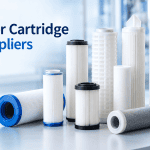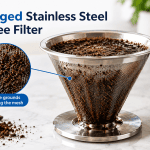
Filter cartridges rely on more than just filter media to do their job. Inside many cartridge designs sits a perforated filter tube a metal component that gives the cartridge its shape, resists the forces of pressurized flow, and lets fluid or air move through in a controlled way. Without this internal structure, filter media alone can crush, collapse, or shift out of position under normal operating pressure.
Perforated tubes are used inside or as the core structure of a filter cartridge to hold everything together. They provide a rigid backbone that keeps the media in place while allowing flow to pass through evenly across the surface of the cartridge. The result is a filter element that maintains its shape and function over repeated cycles of pressure and flow.
Getting this component right isn’t just a formality. The tube’s material, hole pattern, open area, wall thickness, and overall dimensions all affect how well the finished cartridge performs and how long it lasts in service. This guide walks through what perforated filter tubes are, how they work, what they’re made of, and how to choose or specify one for a filtration system.
What Is a Perforated Filter Tube?
A perforated filter tube is a cylindrical (or sometimes square or rectangular) metal tube with a pattern of holes machined or punched through its wall. In filtration equipment, it typically serves as an internal support structure for a filter cartridge, sitting either inside, around, or as the core of the filter element.
Basic construction generally involves:
- A tube blank made from sheet metal that is rolled and welded, or an extruded/seamless tube
- A perforation pattern punched, drilled, or laser-cut into the tube wall
- Open or capped ends, depending on how the tube integrates into the cartridge assembly
The perforation process can be done using mechanical punching, CNC punching, or laser cutting, depending on the hole size, tube diameter, and required precision. Each method produces slightly different results in terms of burr formation, hole tolerance, and open area consistency.
Typical materials include stainless steel, carbon steel, aluminum, and in some cases specialty alloys, chosen based on the application’s chemical exposure, temperature, and pressure requirements.
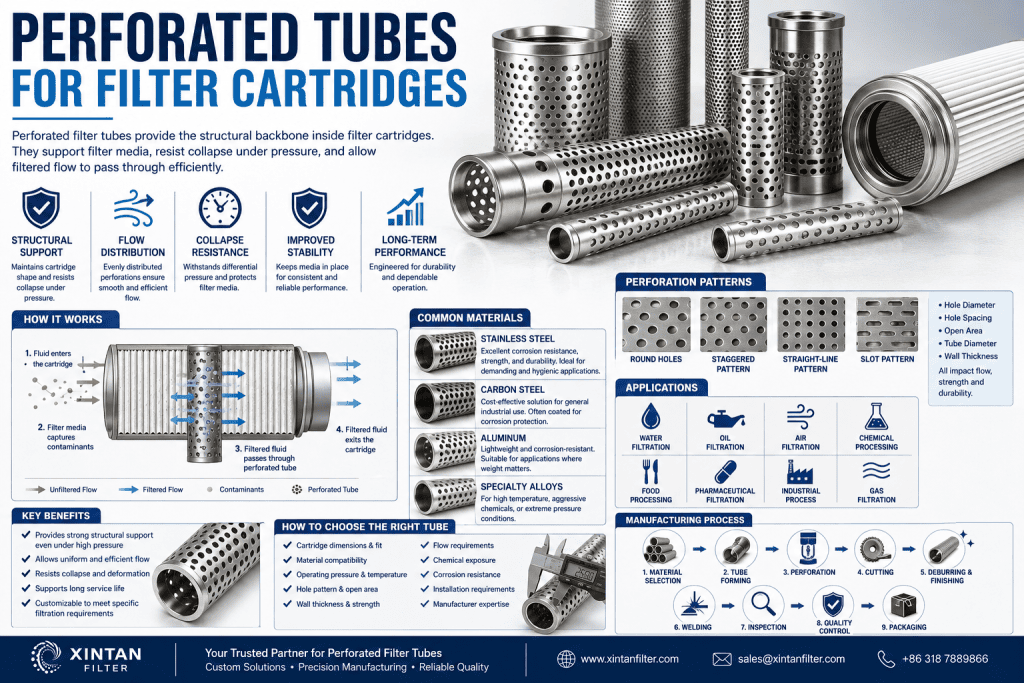
Inside a filter cartridge, the perforated tube functions as a rigid framework. It doesn’t need to trap particles its job is to resist collapse, maintain the cartridge’s cylindrical shape, and let filtered flow pass through its perforations toward the outlet.
Perforated support tube vs. filter media: these are two different components with two different jobs. The filter media (fiber, membrane, pleated paper, mesh, or similar material) is responsible for capturing particles and separating contaminants from the fluid or air stream. The perforated tube is responsible for structural integrity and flow passage. A perforated tube generally provides support rather than replacing the primary filtration function it does not perform particle capture the way filter media does.
How Perforated Tubes Work in Filter Cartridges
While cartridge designs vary, the general flow sequence often looks like this:
- Fluid or air enters the cartridge — either from the outside inward, or from a central core outward, depending on the design.
- Flow passes through the filter media, where particles, contaminants, or impurities are captured.
- The perforated support tube provides structural reinforcement, resisting the pressure differential created as flow moves through the media.
- Filtered fluid or air passes through the tube’s perforations, continuing its path through the cartridge.
- The filtered flow exits the cartridge through the outlet port or connection.
The exact flow direction inside-out or outside-in depends on the specific cartridge design and how the housing is configured. In either case, the perforated tube’s role stays consistent: it supports the media and provides an open flow path for the already-filtered stream.
Why Are Perforated Tubes Used in Filter Cartridges?
Structural Support
Filter media on its own is often relatively flexible or fragile. Under the differential pressure created by flow moving through a filter, media can wrinkle, tear, or collapse without something rigid behind it. A perforated support tube gives the media a stable surface to rest against, helping it hold its shape as pressure builds across the cartridge.
Flow Distribution
A well-designed perforation pattern allows fluid or air to pass through the support structure with minimal restriction. Instead of concentrating flow through a few large openings, an evenly distributed hole pattern helps flow move across the full surface of the tube, which can support more consistent performance across the cartridge.
Collapse Resistance
During operation, differential pressure across a filter cartridge can be significant, especially as the media loads with contaminants. A properly specified perforated tube helps the cartridge resist collapsing inward or outward under this pressure, helping the element maintain its intended shape throughout a filtration cycle.
Improved Cartridge Stability
Beyond resisting collapse, the tube helps maintain the overall geometry of the filter element — keeping pleats aligned, preventing media from shifting, and helping the cartridge fit correctly within its housing.
Long-Term Performance
Selecting an appropriate material, wall thickness, and hole pattern for the operating environment can contribute to more reliable cartridge operation over time. This doesn’t guarantee a specific service life, since actual performance depends on the application, but the right design choices reduce the likelihood of premature structural failure.
Common Materials for Filter Cartridge Support Tubes
Stainless Steel Perforated Tubes
A stainless steel perforated tube is a common choice for demanding filtration environments because of its corrosion resistance, strength, and durability. Stainless steel holds up well in applications involving moisture, chemical exposure, or repeated cleaning cycles, which makes it a frequent choice for industrial, food-grade, and pharmaceutical filtration systems where hygiene and material integrity both matter.
Carbon Steel Perforated Tubes
A perforated steel tube made from carbon steel can be a cost-effective option for industrial applications where extreme corrosion resistance isn’t the primary concern. In environments with moisture or chemical exposure, carbon steel typically requires a protective coating or finish to prevent rust and material degradation over time.
Aluminum Perforated Tubes
A perforated aluminum tube offers lightweight construction, which can be useful in applications where reducing overall cartridge weight matters such as portable filtration equipment or systems where handling and installation weight are a factor. Aluminum’s suitability depends on chemical compatibility with the process fluid, since it may not hold up in all chemical environments the way stainless steel does.
Specialty Alloys
Some filtration applications involve high temperatures, aggressive chemicals, or unusual pressure conditions that go beyond what standard stainless steel, carbon steel, or aluminum can reliably handle. In these cases, specialty alloys may be required. No single material is universally suitable for every filtration environment; material selection should always be matched to the specific operating conditions of the application.
Perforation Patterns for Filter Cartridge Tubes
The perforation pattern on a filter support tube is far from decorative; it directly affects flow, strength, and how the tube performs under pressure. Key pattern variables include:
- Round holes — the most common shape for filtration tubes, offering a good balance of open area and structural strength
- Staggered patterns — holes offset row to row, which can improve strength distribution and flow uniformity compared to a straight grid
- Straight-line patterns — holes aligned in rows and columns, sometimes used where a more uniform visual pattern or specific flow characteristic is needed
- Hole diameter — larger holes generally increase open area but can reduce local wall strength
- Hole spacing and pitch — the distance between holes affects both flow distribution and how much material remains to support structural loads
- Open area — the percentage of the tube’s surface that consists of holes versus solid material
- Tube diameter — affects overall flow capacity and how the tube fits within the cartridge assembly
- Wall thickness — a key factor in how much pressure and mechanical stress the tube can withstand
These specifications work together. A pattern with high open area and thin walls may support strong flow but sacrifice structural strength, while a conservative pattern with thicker walls may prioritize durability at the cost of some flow capacity. Balancing these factors is central to good perforated tube design. For a deeper look at how these variables interact, see our guide on [Perforated Tube Hole Patterns Explained].
Understanding Open Area in Perforated Filter Tubes
Open area refers to the percentage of a perforated tube’s surface that is made up of holes rather than solid metal. It’s typically expressed as a percentage of total surface area.
Open area matters because it directly influences how much flow can pass through the tube’s wall. Larger or more numerous holes generally increase open area and reduce flow restriction, which can be beneficial in applications where minimizing pressure drop across the support structure is a priority.
However, there’s a trade-off. As open area increases, less solid material remains to carry structural loads. Excessive open area can reduce the tube’s ability to resist collapse, deformation, or fatigue under repeated pressure cycles. This is why an open area isn’t chosen for flow performance alone it has to be balanced against the structural demands of the application.
For a more detailed breakdown of how open area is calculated and applied, see our article on [Understanding Open Area in Perforated Tubes].
Applications of Perforated Filter Tubes
Water Filtration
Support tubes are used in cartridges for municipal, industrial, and residential water filtration systems, where they help maintain cartridge shape under varying flow pressures.
Oil Filtration
In oil filtration systems including lubrication and hydraulic applications perforated tubes provide the structural backbone that lets filter media withstand continuous pressurized flow.
Air Filtration
Industrial air filtration systems often use perforated tubes to support pleated media cartridges, helping maintain airflow distribution and cartridge shape.
Chemical Processing
Chemical processing filtration requires careful material selection, since the perforated tube must remain chemically compatible with the process fluid while still providing structural support.
Food Processing
Food-grade filtration systems often rely on stainless steel perforated tubes for their combination of strength, hygiene, and ease of cleaning.
Pharmaceutical Filtration
Pharmaceutical applications typically demand tight tolerances, corrosion-resistant materials, and consistent quality, all relevant considerations when specifying a perforated support tube for these systems.
Industrial Process Filtration
General industrial process filtration spans a wide range of conditions, from moderate-duty to high-pressure environments, where the support tube must be matched to the specific process.
Gas Filtration
In gas filtration cartridges, perforated tubes provide structural support while allowing gas flow to pass through with minimal restriction.
Across all of these applications, the perforated support tube can be incorporated into a cartridge filtration system in different configurations, depending on how the housing and media are designed.
Perforated Tube vs Filter Media
It’s important to understand that a perforated support tube and filter media serve distinct, complementary roles within a filter cartridge.
| Feature | Perforated Support Tube | Filter Media |
| Main Function | Structural support | Particle separation |
| Flow Passage | Through perforations | Through filtration media |
| Structural Strength | High | Application-dependent |
| Particle Capture | Usually not primary function | Primary function |
| Material | Metal or other suitable material | Fiber, membrane, mesh, etc. |
These two components typically work together in a filter cartridge; the media performs the actual filtration, while the perforated tube provides the structural foundation that lets the media do its job reliably under operating pressure.
How to Choose the Right Perforated Filter Tube
Selecting the right perforated tube for a filter cartridge involves evaluating several interconnected factors:
- Filter cartridge dimensions — the tube must fit the cartridge housing and media configuration precisely
- Tube diameter — affects flow capacity and fit within the assembly
- Tube length — must match the cartridge’s overall design
- Wall thickness — influences structural strength and pressure resistance
- Hole diameter — affects both open area and local strength
- Hole pattern — staggered, straight-line, or custom layouts suited to the application
- Open area — balanced against structural requirements
- Material — matched to chemical, temperature, and hygiene requirements
- Operating pressure — the tube must withstand the maximum differential pressure expected in service
- Operating temperature — material properties can shift at high or low temperatures
- Chemical compatibility — the tube must resist the specific fluids or gases it will contact
- Flow requirements — open area and hole pattern should support the required flow rate
- Corrosion resistance — critical in humid, chemical, or food-grade environments
- Installation requirements — end configurations, welds, and connections must match the cartridge assembly process
When you choose a perforated tube for a filter cartridge, it’s worth treating it as an engineering decision rather than a generic component swap. Because so many of these factors interact, working with an experienced industrial perforated tube manufacturer can help ensure the finished component matches the demands of the application. In cases where standard sizing doesn’t fit the design, a custom perforated tube may be the more practical solution.
Custom Perforated Tubes for Filter Cartridges
Not every filtration system fits neatly into standard tube dimensions. Custom manufacturing allows filter cartridge designs to move beyond off-the-shelf options and address:
- Non-standard tube dimensions
- Custom hole diameters
- Custom hole patterns or layouts
- Specific open area requirements
- Special materials for unique chemical or temperature conditions
- Surface finishes for hygiene or corrosion needs
- OEM cartridge designs with proprietary geometries
- High-pressure applications requiring reinforced wall thickness
A custom perforated tube gives filter cartridge manufacturers and OEMs the flexibility to match support structures precisely to their filtration system’s requirements, rather than compromising on a standard part that’s close but not quite right.
Working with an established perforated tube manufacturer or perforated tube supplier also means access to engineering input during the design process. That said, final specifications including dimensions, tolerances, and material selection should always be confirmed with the filtration system designer or the component manufacturer directly, since every application carries its own operating conditions and constraints.
Manufacturing of Perforated Filter Tubes
While specific processes vary by manufacturer and application, perforated filter tube production generally follows these general stages:
- Material selection — choosing the appropriate metal or alloy for the application
- Tube forming or preparation — rolling and welding sheet metal, or preparing seamless/extruded tube stock
- Perforation — punching, drilling, or laser-cutting the hole pattern into the tube wall
- Cutting — trimming the tube to the required length
- Welding where applicable — joining seams or end caps as needed for the design
- Deburring — removing sharp edges left by the perforation process
- Surface finishing — treatments such as passivation or polishing, depending on the application
- Dimensional inspection — verifying tube diameter, length, hole size, and pattern against specification
- Quality control — checking for defects, consistency, and compliance with required tolerances
- Packaging — preparing finished tubes for shipment in a way that protects them from damage
For a closer look at each stage of production, see our detailed guide: [How Perforated Tubes Are Manufactured].
Common Problems With Filter Cartridge Support Tubes
Even well-designed perforated tubes can run into issues over time. Common problems include:
- Clogging — debris or contaminants building up around the perforations, often addressed through routine cleaning schedules
- Corrosion — material degradation from moisture or chemical exposure, mitigated by choosing corrosion-resistant materials such as stainless steel or applying protective coatings
- Hole deformation — perforations stretching or distorting under excessive pressure, often linked to undersized wall thickness for the application
- Cracking — stress fractures that can develop from repeated pressure cycling or material fatigue
- Abrasion — surface wear from particulate-laden flow, which may require more abrasion-resistant materials or finishes
- Incorrect open area — a mismatch between the tube’s open area and the system’s flow requirements, leading to excess pressure drop or insufficient structural support
- Poor dimensional fit — tubes that don’t match the cartridge housing precisely, causing installation or sealing issues
- Excessive pressure stress — operating conditions exceeding what the tube was designed to withstand
Most of these issues trace back to a mismatch between the tube’s specification and its actual operating environment, which is why careful selection during the design phase matters. For more detail on causes and solutions, see [Common Problems with Perforated Tubes and Their Solutions].
Maintenance and Inspection
Routine maintenance helps catch issues before they affect filtration performance. A practical inspection routine typically includes:
- Visual inspection for visible damage, deformation, or wear
- Checking perforations for blockage, deformation, or enlargement
- Cleaning to remove buildup, following methods appropriate to the tube’s material
- Corrosion inspection, particularly for tubes operating in humid or chemically active environments
- Weld inspection, checking seams and joints for cracks or failure
- Dimensional checks to confirm the tube still meets its original specifications
- Monitoring pressure drop across the cartridge, since a rising pressure differential can signal clogging or structural issues
- Replacement of damaged components before a failure affects the broader filtration system
Following a consistent inspection schedule can help extend the useful life of the perforated tube and the cartridge as a whole. For more guidance, see [Extending the Lifespan of Industrial Perforated Tubes] and [How to Clean Stainless Steel Perforated Tubes].
Frequently Asked Questions
- What is a perforated filter tube?
A perforated filter tube is a metal tube with a pattern of holes that serves as a structural support component inside or around a filter cartridge, providing rigidity and a flow path for filtered fluid or air.
- What is the purpose of a perforated tube inside a filter cartridge?
Its purpose is to provide structural support to the filter media, help the cartridge resist collapse under pressure, and allow flow to pass through the support structure after filtration.
- What material is best for filter cartridge support tubes?
There’s no single best material for every application. Stainless steel is common for corrosion resistance and durability, carbon steel can suit less demanding environments, and aluminum offers a lightweight option the right choice depends on the specific operating conditions.
- How does hole size affect filter cartridge performance?
Hole size affects both open area and structural strength. Larger holes typically increase open area and flow capacity but can reduce the tube’s local structural strength if not balanced with appropriate wall thickness.
- What is open area in a perforated filter tube?
Open area is the percentage of the tube’s surface made up of holes versus solid metal. It influences flow capacity, pressure drop, and the tube’s structural strength.
- Can perforated filter tubes be customized?
Yes. Custom perforated tubes can be manufactured with specific dimensions, hole patterns, open area, materials, and finishes to match OEM cartridge designs or non-standard requirements.
- Are stainless steel perforated tubes suitable for industrial filtration?
Stainless steel perforated tubes are commonly used in industrial filtration due to their corrosion resistance and strength, though suitability still depends on the specific chemical and operating conditions of the application.
- How do I choose a perforated tube for a filter cartridge?
Choosing the right tube involves evaluating cartridge dimensions, tube diameter and length, wall thickness, hole pattern, open area, material compatibility, operating pressure and temperature, and flow requirements ideally in consultation with the filtration system designer or tube manufacturer.
Conclusion
A perforated filter tube plays a supporting but essential role inside a filter cartridge. It provides the structural backbone that keeps filter media in place, resists collapse under operating pressure, and maintains a clear flow path for filtered fluid or air to exit the cartridge.
Getting the details right material selection, hole pattern, open area, wall thickness, and overall dimensions has a direct impact on how well the finished cartridge performs and holds up over time. Because every filtration system operates under different pressures, temperatures, and chemical conditions, there’s no one-size-fits-all specification. Custom perforated tubes give engineers and OEMs the flexibility to match support structures precisely to their application, and routine maintenance helps keep those structures performing reliably for the long term.
The right perforated filter tube should always be selected based on the cartridge design, operating conditions, material compatibility, and required flow characteristics not assumed from a generic standard part.
Contact Xintan Filter to discuss your perforated filter tube requirements, custom cartridge support tubes, material options, and industrial filtration applications.