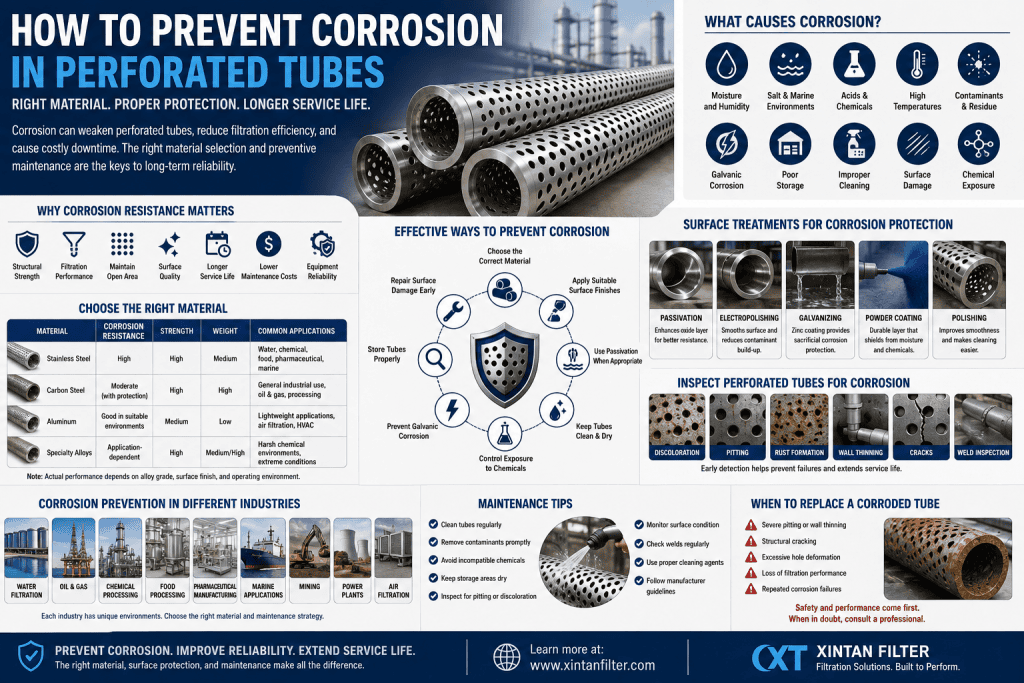
Corrosion is one of the most persistent challenges facing perforated tubes in industrial filtration and processing systems. Moisture, chemical exposure, salt, and fluctuating temperatures can all attack the metal surface over time, gradually weakening the structure and reducing performance. This is why selecting a corrosion resistant perforated tube and maintaining it properly matters so much for long-term reliability.
When corrosion takes hold, it doesn’t just affect appearance. It can compromise structural strength, reduce filtration efficiency, and shorten service life, often leading to unplanned downtime and higher maintenance costs. The good news is that corrosion is largely manageable with the right combination of material selection and preventive maintenance. This guide walks through what causes corrosion in perforated tubes, how to choose the right material, and the practical steps engineers and maintenance teams can take to keep corrosion under control.
What Causes Corrosion in Perforated Tubes?
Corrosion develops when a metal surface reacts with its environment. In perforated tube applications, several factors commonly contribute:
- Moisture and humidity — Persistent dampness creates the electrochemical conditions corrosion needs to develop, especially around perforation edges.
- Salt and marine environments — Chloride exposure from seawater or coastal air is particularly aggressive toward unprotected metal surfaces.
- Acids and chemicals — Process fluids with acidic or alkaline properties can attack metal surfaces, especially if the material grade isn’t matched to the chemical.
- High temperatures — Elevated temperatures can accelerate the rate of chemical reactions that drive corrosion.
- Chemical exposure — Repeated or prolonged contact with incompatible substances gradually degrades protective oxide layers.
- Contaminants — Dirt, debris, and residue trapped on the tube surface can hold moisture against the metal and create localized corrosion sites.
- Galvanic corrosion — Contact between dissimilar metals in the presence of an electrolyte (like moisture) can cause accelerated corrosion of the less noble metal.
- Poor storage — Storing tubes in damp, uncontrolled environments before installation invites corrosion before the equipment is even in service.
- Improper cleaning — Using incompatible cleaning agents or abrasive methods can strip protective layers and expose bare metal.
- Surface damage — Scratches, dents, or handling damage can compromise the protective surface finish, giving corrosion a starting point.
Why Corrosion Resistance Matters
Corrosion doesn’t just affect the surface its impact spreads across several aspects of tube performance:
- Structural strength — Corroded metal loses thickness and integrity, making the tube more prone to deformation or failure under normal operating stress.
- Filtration performance — Pitting and surface degradation can alter hole dimensions, affecting filtration accuracy.
- Open area — Corrosion buildup or pitting around perforations can effectively change the tube’s open area over time.
- Surface quality — A degraded surface can shed particles into the process stream, introducing contamination.
- Product lifespan — Ongoing corrosion shortens the practical service life of the tube.
- Maintenance costs — Corroded components require more frequent inspection, cleaning, and eventual replacement.
- Equipment reliability — Unexpected corrosion-related failures can lead to unplanned downtime and disruption to production schedules.
Choosing the Right Material for Corrosion Resistance
Stainless Steel Perforated Tubes
A stainless steel perforated tube is one of the most commonly selected options for corrosive environments. Its chromium content forms a passive oxide layer that helps resist rust and chemical attack, making it a practical choice across water treatment, chemical processing, and food-grade applications. Different stainless grades offer varying levels of resistance, so grade selection should match the specific chemical and environmental conditions.
Carbon Steel Perforated Tubes
Carbon steel perforated tube options offer strong mechanical properties and are often more cost-effective, but they lack the inherent corrosion resistance of stainless steel. In environments with moisture or chemical exposure, carbon steel typically requires additional protection—such as coatings or galvanizing to perform reliably over time.
Perforated Aluminum Tubes
A perforated aluminum tube provides a lightweight alternative that can offer good corrosion resistance in many environments, thanks to its natural oxide layer. However, this resistance can vary depending on the specific alloy and the chemicals it’s exposed to, so it’s worth confirming suitability for the intended application.
Specialty Alloys
For particularly aggressive chemical environments, specialty alloys may be worth considering. These materials are generally selected based on the specific process chemistry and conditions involved, and it’s best to consult with a knowledgeable manufacturer before specifying one for a demanding application. No material including specialty alloys should be assumed to be entirely corrosion-proof; performance always depends on the specific grade and operating conditions.
Material Comparison Overview
| Material | Corrosion Resistance | Strength | Weight | Common Applications |
| Stainless Steel | High | High | Medium | Water, chemical, food |
| Carbon Steel | Moderate with protection | High | High | General industrial use |
| Aluminum | Good in suitable environments | Medium | Low | Lightweight applications |
| Specialty Alloys | Application-dependent | High | Medium/High | Harsh chemical environments |
Actual corrosion performance depends heavily on the specific alloy grade, surface finish, and the operating environment, so this table should be used as a general reference rather than a guarantee of performance.
Effective Ways to Prevent Corrosion
Choose the Correct Material
Matching the tube material and grade to the specific chemical, temperature, and moisture conditions of the application is the foundation of corrosion prevention.
Apply Suitable Surface Finishes
Surface treatments can add a protective layer between the metal and its environment, reducing the rate of corrosion attack.
Use Passivation When Appropriate
For stainless steel components, passivation treatments help remove surface contaminants and strengthen the natural oxide layer that provides corrosion resistance.
Keep Tubes Clean and Dry
Removing moisture, debris, and residue on a regular basis prevents the buildup of conditions that encourage corrosion.
Control Exposure to Chemicals
Limiting unnecessary contact with incompatible chemicals, and rinsing tubes after exposure to aggressive substances, helps preserve the protective surface layer.
Prevent Galvanic Corrosion
Avoiding direct contact between dissimilar metals—or using isolating materials where contact is unavoidable—reduces the risk of galvanic corrosion.
Inspect Tubes Regularly
Routine inspection helps catch early signs of corrosion before they progress into more serious structural issues.
Store Tubes Properly
Storing tubes in dry, temperature-controlled environments prior to installation helps prevent corrosion from starting before the equipment is even in use.
Repair Surface Damage Early
Addressing scratches, dents, or coating damage promptly prevents these vulnerable points from becoming corrosion sites.
Surface Treatments for Corrosion Protection
Several surface treatments can help extend corrosion resistance, depending on the base material and application:
- Passivation — Enhances the natural oxide layer on stainless steel to improve resistance to staining and corrosion.
- Electropolishing — Smooths the metal surface, reducing sites where contaminants and moisture can collect.
- Galvanizing — Applies a zinc coating to carbon steel to provide a sacrificial layer of corrosion protection.
- Powder coating — Adds a durable protective layer that shields the metal surface from moisture and chemicals.
- Protective coatings — Various coating systems can be applied depending on the chemical and environmental exposure expected.
- Polishing — Improves surface smoothness, which can help reduce contaminant buildup and improve cleanability.
The most appropriate treatment depends on the base material, the operating environment, and the specific performance goals of the application there’s no universal solution that fits every case.
Corrosion Prevention in Different Industries
Water Filtration
Consistent moisture exposure makes material selection and regular cleaning especially important in water treatment applications.
Oil & Gas
Exposure to hydrocarbons, moisture, and sometimes sour or corrosive gas streams calls for careful material and coating selection.
Chemical Processing
Highly variable chemical exposure means material compatibility should be evaluated specifically for each process stream.
Food Processing
Hygiene requirements and frequent washdown cycles make stainless steel a common choice, along with attention to cleaning chemical compatibility.
Pharmaceutical Manufacturing
Strict cleanliness and process purity requirements typically call for corrosion-resistant materials with smooth, easily cleanable surfaces.
Marine Applications
Constant salt exposure makes corrosion resistance a top priority, often requiring higher-grade stainless materials or specialized coatings.
Mining
Abrasive particles combined with moisture and sometimes acidic runoff create a demanding environment for both corrosion and wear resistance.
Power Plants
Exposure to steam, treated water, and varying temperatures requires materials suited to the specific process conditions involved.
Air Filtration
While often less chemically aggressive, humidity and airborne contaminants can still contribute to gradual corrosion over time.
Environmental conditions vary significantly across these industries, which is why material selection should always be based on the specific operating environment rather than general industry assumptions.
How to Inspect Perforated Tubes for Corrosion
Routine inspection should look for the following signs:
- Visual inspection for general surface condition and discoloration
- Surface discoloration that may indicate early-stage oxidation
- Pitting, which appears as small localized pits or holes in the surface
- Rust formation, particularly on carbon steel or damaged protective coatings
- Cracks, which may develop at corrosion sites under mechanical stress
- Wall thinning, which reduces structural strength and may require thickness measurement to detect
- Hole deformation, which can result from weakened metal around corroded perforations
- Weld inspection, since welded joints are often more vulnerable to corrosion attack
If inspection reveals significant pitting, wall thinning, or structural concerns, professional assessment is recommended to determine whether repair is sufficient or replacement is necessary.
Maintenance Tips for Corrosion-Resistant Perforated Tubes
- Clean tubes on a regular schedule appropriate to the operating environment
- Remove contaminants and residue promptly rather than letting them accumulate
- Avoid incompatible chemicals during cleaning and processing
- Keep storage areas dry before and between installations
- Inspect perforations for early pitting or discoloration
- Monitor overall surface condition during routine maintenance checks
- Check welds for signs of localized corrosion or cracking
- Follow manufacturer recommendations for cleaning agents and maintenance intervals
How to Choose a Corrosion Resistant Perforated Tube
When evaluating options, buyers should consider:
- Material grade suited to the specific chemical and environmental exposure
- Chemical environment, including any acids, salts, or aggressive compounds present
- Temperature range the tube will experience during operation
- Pressure conditions within the system
- Hole pattern appropriate to the filtration or flow requirements
- Wall thickness needed for structural strength and expected service life
- Surface finish suited to cleanability and corrosion resistance
- Required open area for the application’s flow needs
- Industry requirements specific to the sector, such as food-grade or pharmaceutical standards
- Expected service conditions, including cycles of exposure, cleaning frequency, and mechanical stress
When Should a Corroded Perforated Tube Be Replaced?
Some signs indicate that replacement is the safer and more practical choice over continued repair:
- Severe pitting that has significantly reduced wall thickness
- Significant wall thinning across a large portion of the tube
- Structural cracking associated with corrosion damage
- Excessive hole deformation caused by weakened metal around perforations
- Loss of filtration performance that cleaning or minor repair can’t restore
- Repeated corrosion failures in the same tube or location, suggesting an ongoing material or environmental mismatch
Because corrosion-related failures can affect both performance and safety, a professional assessment is recommended whenever damage appears extensive rather than relying solely on visual judgment.
Frequently Asked Questions
- What is a corrosion resistant perforated tube?
It’s a perforated tube manufactured from a material such as stainless steel or a suitable alloy selected specifically to withstand moisture, chemical exposure, or other corrosive conditions in its operating environment.
- Which material is best for corrosion resistance?
There’s no single best material for every situation. Stainless steel is commonly used for its broad corrosion resistance, but the right choice depends on the specific chemicals, temperature, and environment involved.
- Can stainless steel perforated tubes rust?
Stainless steel is highly resistant to rust, but it isn’t entirely immune. Exposure to certain chemicals, chlorides, or damage to its protective oxide layer can still lead to corrosion under specific conditions.
- How can corrosion be prevented in carbon steel tubes?
Protective measures such as galvanizing, coatings, or careful control of moisture and chemical exposure can help reduce corrosion risk in carbon steel components.
- Does surface finishing improve corrosion resistance?
Yes, treatments like passivation, electropolishing, and protective coatings can enhance a tube’s resistance to corrosion, depending on the base material and application.
- How often should perforated tubes be inspected?
Inspection frequency depends on the severity of the operating environment; tubes in harsh chemical or marine conditions typically need more frequent checks than those in milder environments.
- What causes pitting corrosion in perforated tubes?
Pitting often results from localized chemical attack, chloride exposure, or damage to a protective surface layer that allows corrosion to concentrate in a small area.
- When should a corroded perforated tube be replaced?
Replacement is generally recommended when corrosion has caused significant wall thinning, structural cracking, major hole deformation, or a persistent loss of filtration performance.
Conclusion
Corrosion is a common but manageable challenge for perforated tubes used across industrial filtration and processing applications. Understanding the main causes from moisture and chemical exposure to galvanic reactions and poor storage makes it possible to take practical, preventive steps rather than reacting after damage has already occurred.
Selecting the right corrosion resistant perforated tube for the specific operating environment, applying appropriate surface protection, and following consistent cleaning and inspection routines all contribute to better long-term reliability. Combined with regular maintenance, these steps can help improve equipment reliability, reduce maintenance costs, and extend the practical service life of perforated tube components.
Contact Xintan Filter to discuss your corrosion-resistant perforated tube requirements, custom specifications, material selection, and industrial filtration applications.