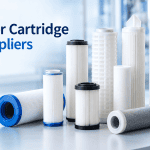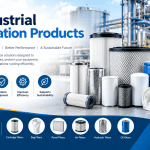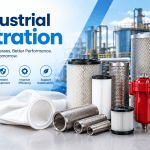
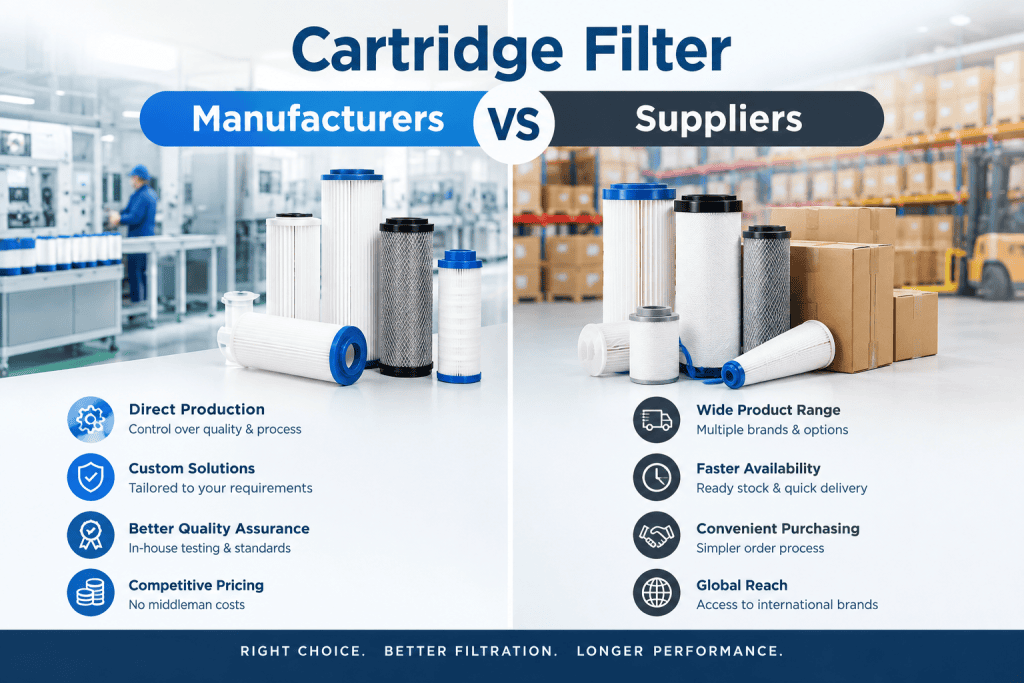
Choosing between a Cartridge Filter Manufacturers and a filter cartridge supplier directly affects your cost, lead time, and product consistency. In short, a cartridge filter manufacturer designs and produces filtration media in-house, giving you better quality control, customization, and long-term pricing, while a supplier typically resells filters sourced from multiple factories, offering convenience but less control over specifications and quality consistency. For industrial buyers making recurring, high-volume purchases, understanding this distinction is not a technicality, it’s a decision that shapes your entire filtration supply chain.
Why this Comparison Matters for Industrial Procurement
Cartridge filters are used across water treatment, oil and gas, food and beverage, pharmaceuticals, and chemical processing. Because filtration directly affects product purity, equipment lifespan, and regulatory compliance, the source of your filter cartridges matters as much as the product specification sheet. Buyers who treat ‘manufacturer’ and ‘supplier’ as interchangeable terms often end up with inconsistent micron ratings, unpredictable lead times, or filters that fail prematurely under industrial-grade pressure and temperature conditions.
What is a Cartridge Filter Manufacturer?
A cartridge filter manufacturer owns the production process end-to-end, from raw material sourcing (polypropylene, PES, glass fiber, stainless steel mesh) to pleating, welding, potting, and quality testing. Manufacturers typically maintain in-house R&D and testing labs, which allows them to:
- Customize micron ratings, dimensions, end-cap types, and materials for specific applications
- Control raw material quality and batch consistency
- Offer better pricing on bulk and repeat orders since there is no reseller margin
- Provide technical documentation, certifications, and traceability for compliance-heavy industries
- Respond faster to custom engineering requests or OEM production needs
Companies such as Xintan Filter represent this manufacturer-first model, producing perforated filter components and cartridge filter industrial solutions directly at the factory level rather than acting as a middleman. This structure is typically preferred by buyers who need consistent specifications across large, recurring orders.
What is a Filter Cartridge Supplier?
A filter cartridge supplier, by contrast, usually operates as a distributor or trading company. Suppliers source cartridges from one or more manufacturers and resell them, often maintaining warehouse stock across multiple brands and specifications. This model has genuine advantages for certain buyers:
- Faster local delivery from regional warehouses
- Access to multiple filter brands and types through a single point of contact
- Lower minimum order quantities for smaller or urgent purchases
- Less need to manage multiple manufacturer relationships
The trade-off is that filter cartridge suppliers add a margin layer, have limited ability to customize specifications, and depend on their upstream manufacturer’s production schedule, meaning any delay or quality issue on the factory side eventually reaches the buyer with less transparency.
Cartridge Filter Manufacturer vs Supplier: Side-by-Side Comparison
| Factor | Manufacturer | Supplier |
| Customization | High — direct factory control | Limited to stocked options |
| Pricing on bulk orders | More competitive, no reseller margin | Higher due to markup |
| Lead time (custom orders) | Longer for first run, faster on repeats | Fast if in stock, slow if not |
| Quality traceability | Full batch and material traceability | Depends on upstream disclosure |
| Best for | Recurring, high-volume, OEM or custom needs | Urgent, small-batch, multi-brand needs |
Cartridge Filter Industrial Applications: Where the Choice Matters Most
The manufacturer-versus-supplier decision carries different weight depending on the application:
Water and Wastewater Treatment
Consistent micron ratings and dirt-holding capacity are critical for treatment plants operating under regulatory oversight. Sourcing directly from a cartridge filter manufacturer reduces the risk of batch-to-batch variation that can compromise compliance testing.
Oil, Gas, and Chemical Processing
High-pressure and high-temperature environments demand cartridges engineered for specific chemical compatibility. Manufacturers can validate materials against your process chemistry; generic supplier stock often cannot guarantee this.
Food, Beverage, and Pharmaceutical Manufacturing
These industries require certified materials (FDA, NSF, or equivalent) and full documentation. A manufacturer relationship simplifies audits because certifications originate at the production source rather than passing through multiple hands.
How to Choose the Right Partner for Your Business
Use these questions to evaluate whether a manufacturer or supplier fits your procurement strategy:
- What is my order volume and frequency? High-volume, repeat orders favor manufacturers.
- Do I need custom micron ratings, materials, or end-cap configurations?
- How critical is documentation and traceability for my compliance requirements?
- What is my tolerance for lead time versus my need for lowest unit cost?
- Can the vendor provide test reports, certifications, and technical support directly?
Common Mistakes Industrial Buyers Make
- Assuming all ‘manufacturers’ listed online actually produce in-house — many are trading companies using the term loosely
- Choosing the lowest quoted price without verifying material grade or micron accuracy
- Failing to request third-party test data or factory audit reports before committing to bulk orders
- Overlooking total cost of ownership — cheaper cartridges that fail early cost more in downtime and replacement
Expert Sourcing Tips
- Request a factory audit or virtual facility tour before placing large orders with a new manufacturer
- Ask for sample cartridges and run them under your actual operating conditions before committing
- Verify whether pricing includes freight, customs, and documentation, especially for cross-border sourcing
- Build a dual-sourcing strategy: a primary manufacturer for volume and a local supplier for emergency stock
Frequently Asked Questions
Is it cheaper to buy from a cartridge filter manufacturer or a supplier?
For large, recurring orders, manufacturers are usually cheaper because there is no reseller markup. For small or one-off orders, a supplier may be more cost-effective due to lower minimum order quantities.
Can a filter cartridge supplier offer the same quality as a manufacturer?
Quality depends on the manufacturer the supplier sources from, not the supplier itself. Always ask suppliers to disclose their upstream factory and provide test certifications.
How do I verify if a company is a genuine cartridge filter manufacturer?
Request factory photos or a live video audit, ask for production capacity details, and check for manufacturing certifications such as ISO 9001. Genuine manufacturers can answer detailed technical questions about materials and processes without delay.
What documentation should a cartridge filter industrial supplier provide?
At minimum, request material safety data sheets, micron rating test reports, dimensional drawings, and relevant compliance certifications (NSF, FDA, ISO) depending on your industry.
Conclusion
For industrial buyers, the manufacturer-versus-supplier decision is really a question of control versus convenience. Manufacturers offer customization, traceability, and better long-term pricing for consistent, high-volume needs, while suppliers offer speed and flexibility for smaller or urgent orders. The most resilient procurement strategy combines both, a trusted manufacturing partner for your core supply and a responsive supplier network for contingency needs. Evaluating potential partners against the criteria above will help you build a filtration supply chain that protects both your operations and your bottom line.