Keeping filtration equipment running efficiently starts with proper maintenance, and knowing how to clean a perforated tube correctly is one of the most important skills for engineers, maintenance teams, and plant operators. A stainless steel perforated tube works hard inside filtration systems, separators, and support structures, and over time it collects dust, oil, scale, and other contaminants that reduce performance. Learning how to clean perforated tubes the right way protects your investment, keeps filtration efficiency high, and prevents unplanned downtime.
This guide walks through why cleaning matters, what causes buildup, the best cleaning methods for different situations, the tools you need, a step-by-step process, common mistakes, and long-term maintenance strategies. Whether you manage a filtration support tube in a chemical plant or specify a custom perforated tube for an OEM application, this article gives you the practical, technical information you need.
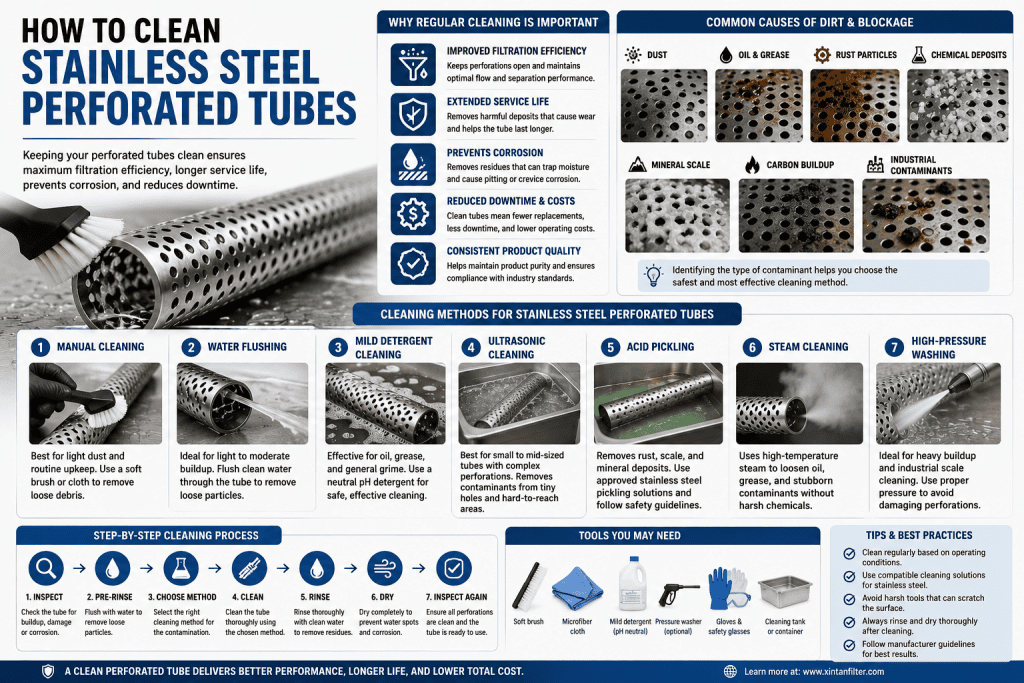
Why Regular Cleaning Is Important
A perforated metal tube is only as effective as its condition allows. When holes become clogged or surfaces accumulate residue, the entire filtration system suffers. Regular cleaning delivers several measurable benefits.
Improved filtration efficiency. Blocked perforations restrict flow and reduce the tube’s ability to separate solids from liquids or gases. Clean openings maintain the designed flow rate and filtration accuracy.
Extended service life. Contaminants left on stainless steel surfaces can trap moisture and chemical residue against the metal, accelerating wear even on corrosion-resistant grades. Routine cleaning helps a perforated steel tube reach its full expected lifespan.
Prevention of corrosion. While stainless steel is prized for corrosion resistance, that resistance isn’t unlimited. Chlorides, acidic residues, and mineral deposits left in contact with the surface for extended periods can compromise the protective chromium oxide layer, leading to pitting or crevice corrosion.
Reduced downtime and lower operating costs. A clogged or degraded perforated tube forces more frequent replacements and unplanned shutdowns. Consistent filter maintenance keeps production schedules predictable and reduces total cost of ownership.
Consistent product quality. In industries like pharmaceuticals, food processing, and chemical manufacturing, contamination control is critical. A clean filtration support tube helps maintain product purity and regulatory compliance.
Common Causes of Dirt and Blockage
Understanding what causes buildup helps you choose the right cleaning method and adjust your maintenance schedule. The most common contaminants affecting perforated tubing include:
- Dust — Fine particulate from air filtration or dry processing settles in perforations and on the tube surface.
- Oil and grease — Common in lubrication systems, hydraulic filtration, and machining environments, oil residue attracts additional dirt and can be difficult to remove without proper cleaners.
- Rust particles — Even when the tube itself resists corrosion, rust from upstream carbon steel components can deposit on the surface and cause staining or localized corrosion if left untreated.
- Chemical deposits — Process chemicals can leave films or crystalline residue that build up over repeated cycles.
- Mineral scale — Hard water and certain process fluids leave calcium and mineral scale that narrows perforations over time.
- Carbon buildup — High-temperature applications, such as exhaust or combustion-related filtration, can leave carbon deposits that are stubborn and require specific cleaning approaches.
- Industrial contaminants — General plant debris, metal shavings, fibers, and process byproducts all contribute to gradual blockage.
Identifying which of these is present on your industrial perforated tube helps determine the safest and most effective cleaning method.
Cleaning Methods for Stainless Steel Perforated Tubes
There isn’t a single correct way to clean a perforated tube. The right method depends on the type and severity of contamination, the tube’s application, and how much time is available for maintenance.
Manual Cleaning
Best for light dust, surface dirt, and routine upkeep. Using a soft brush or cloth to wipe down the tube removes loose debris without risking damage. This method is quick and suitable for frequent, low-intervention maintenance.
Water Flushing
Ideal for tubes with light to moderate buildup, especially where contaminants are water-soluble. Flushing clean water through the tube and its perforations clears loose particles and is often the first step before deeper cleaning.
Mild Detergent Cleaning
Effective for oil, grease, and general grime. A neutral pH detergent diluted in water lifts residue without attacking the stainless steel surface. This is one of the most commonly recommended methods for routine perforated tube maintenance because it balances effectiveness with safety.
Ultrasonic Cleaning
Best suited for small to mid-sized perforated tubes with fine, embedded contamination in the perforations themselves. High-frequency sound waves create microscopic bubbles that dislodge particles from hard-to-reach areas, making this method ideal for precision filtration components.
Chemical Cleaning
Used for stubborn scale, chemical deposits, or process-specific residue that water and detergent cannot remove. Chemical cleaning requires careful product selection since the wrong chemistry can damage stainless steel or compromise corrosion resistance. Always use cleaners formulated for stainless steel and follow manufacturer guidance on concentration and contact time.
High-Pressure Water Cleaning
Effective for heavier buildup and larger industrial perforated tubes. Pressure washing clears debris quickly across large surface areas but should be used with controlled pressure to avoid deforming thin-wall tubing or damaging perforation edges.
Steam Cleaning
Useful for oil, grease, and biological residue, particularly in food processing or pharmaceutical environments where sanitation is required alongside cleaning. Steam also helps loosen carbon buildup in high-temperature applications.
Quick Reference Table
| Contaminant Type | Recommended Method |
| Light dust | Manual cleaning |
| Loose debris | Water flushing |
| Oil and grease | Mild detergent or steam cleaning |
| Fine embedded particles | Ultrasonic cleaning |
| Mineral scale or chemical residue | Chemical cleaning |
| Heavy industrial buildup | High-pressure water cleaning |
| Carbon deposits | Steam cleaning |
Cleaning Tools and Materials
Using the right tools protects the tube surface while ensuring thorough cleaning. Keep the following on hand for perforated tube maintenance:
- Soft brushes — Nylon or natural-bristle brushes remove debris without scratching stainless steel.
- Microfiber cloths — Ideal for wiping down surfaces and drying without leaving lint or scratches.
- Neutral cleaners — pH-balanced detergents designed for stainless steel prevent surface damage.
- Non-abrasive pads — Useful for stubborn spots without risking scratches that could compromise corrosion resistance.
- High-pressure washer — For larger tubes or heavier contamination, with adjustable pressure settings.
- Ultrasonic cleaner — For precision cleaning of smaller perforated filter tube components.
- Safety equipment — Gloves, eye protection, and appropriate ventilation when using chemical cleaners.
Step-by-Step Cleaning Process
Follow this process to clean a perforated tube safely and effectively, from initial inspection to reinstallation.
- Inspect the tube. Check for visible dirt, discoloration, corrosion spots, or deformation before cleaning. Document any damage that may require replacement rather than cleaning.
- Remove the tube from service. If the perforated tube is part of a larger filtration assembly, follow proper lockout/tagout procedures and safely disconnect the component.
- Remove loose debris. Use a soft brush or compressed air to clear loose particles from the surface and perforations before wet cleaning.
- Flush with water. Rinse the tube thoroughly to remove surface dust and water-soluble residue.
- Apply the appropriate cleaning method. Based on contamination type, use mild detergent, ultrasonic cleaning, chemical cleaning, high-pressure water, or steam cleaning as outlined above.
- Scrub gently where needed. Use soft brushes or non-abrasive pads to work on stubborn spots, always following the direction of the metal grain.
- Rinse thoroughly. Remove all cleaning agents completely, since leftover residue can affect performance or cause staining.
- Dry completely. Use microfiber cloths or allow air drying in a clean environment. Trapped moisture can promote corrosion, especially in perforation edges.
- Inspect again. Confirm all perforations are clear and the surface is free of residue, damage, or discoloration.
- Reinstall the tube. Once fully dry and inspected, return the perforated tube to service following correct installation procedures.
Mistakes to Avoid
Improper cleaning can damage a stainless steel perforated tube and shorten its service life. Avoid these common errors:
- Using steel brushes. Carbon steel bristles can embed iron particles in the stainless surface, leading to rust spots even on corrosion-resistant material.
- Using harsh acids. Strong acids can pit or etch stainless steel, weakening the material and reducing corrosion resistance.
- Using chlorine-based cleaners. Chlorine is one of the most aggressive agents against stainless steel and can cause pitting corrosion even at low concentrations.
- Scratching the surface. Abrasive pads or tools can create micro-scratches that trap contaminants and become corrosion starting points.
- Skipping inspection. Cleaning without inspecting first or after means damage or wear can go unnoticed until failure occurs.
- Over-pressurizing during cleaning. Excessive pressure from washers can distort perforation shapes or thin tube walls.
- Incomplete drying. Leaving moisture behind, especially in tight perforations, encourages corrosion and bacterial growth.
Maintenance Tips
Consistent care extends the life of any stainless steel perforated tube and keeps filtration systems performing as designed.
Establish a cleaning schedule. Base frequency on operating conditions—high-contamination environments need more frequent cleaning than clean, low-particulate settings.
Store tubes properly. Keep spare or removed tubes in a dry, clean area away from chemical fumes and temperature extremes to prevent degradation before use.
Conduct routine inspections. Regular visual and functional checks catch problems early, before they require costly repairs or replacement.
Apply preventive maintenance. Address upstream contamination sources when possible, since reducing the amount of debris entering the system reduces cleaning frequency and wear.
Know when to replace. Even well-maintained tubes eventually reach the end of their service life. Watch for persistent discoloration, deformation, cracking, or perforations that no longer clear fully during cleaning, and replace the component before it affects system performance.
Preventive Maintenance Checklist
- [ ] Visual inspection completed
- [ ] Cleaning method matched to contamination type
- [ ] Approved cleaners and tools used
- [ ] Full rinse and dry completed
- [ ] Post-cleaning inspection passed
- [ ] Tube reinstalled correctly
- [ ] Maintenance log updated
Frequently Asked Questions
- How often should I clean a perforated tube?
Cleaning frequency depends on the application and contamination level. Light-duty air filtration may only need cleaning every few months, while heavy industrial use with oil, chemicals, or scale may require weekly or monthly cleaning. Reviewing performance data and inspection results helps determine the right schedule.
- Can I use bleach to clean stainless steel perforated tubes?
No. Bleach and other chlorine-based cleaners can cause pitting corrosion on stainless steel, even at low concentrations. Use neutral, stainless-steel-safe cleaners instead.
- What’s the difference between cleaning a perforated steel tube and a perforated aluminum tube?
Aluminum is softer and more reactive to certain chemicals than stainless steel, so aluminum tubes generally require milder cleaning agents and gentler mechanical cleaning to avoid surface damage. Stainless steel tolerates a broader range of cleaning methods but still requires care to protect its corrosion-resistant layer.
- Is ultrasonic cleaning safe for stainless steel perforated tubes?
Yes. Ultrasonic cleaning is one of the safest and most effective methods for stainless steel, particularly for removing fine particles embedded in small perforations, and it does not involve abrasive contact with the surface.
- What should I do if I find corrosion during inspection?
Assess the extent of the corrosion. Light surface staining can sometimes be cleaned and treated, but pitting or structural damage typically means the tube should be replaced to avoid system failure. Consulting a perforated tube manufacturer or supplier can help determine whether repair or replacement is the better option.
- Can high-pressure washing damage a perforated tube?
Yes, if pressure is too high or applied at close range, it can deform perforations or thin the tube wall. Use manufacturer-recommended pressure settings and maintain proper distance during cleaning.
- How do I know if a tube needs replacement instead of cleaning?
If cleaning no longer restores full flow through the perforations, or if you notice persistent corrosion, cracking, or physical deformation, replacement is the safer and more cost-effective choice compared to continued maintenance on a failing component.
- Where can I source a reliable custom perforated tube for my filtration system?
Working with an experienced perforated tube manufacturer ensures you get the correct alloy grade, hole pattern, and dimensions for your specific filtration equipment, along with technical support for proper installation and maintenance.
Conclusion
Knowing how to clean a perforated tube properly protects your filtration system’s performance, extends the life of your equipment, and reduces the risk of unplanned downtime. By understanding what causes buildup, choosing the right cleaning method, using the correct tools, and following a consistent maintenance schedule, you can keep every stainless steel perforated tube in your system operating at its best. Avoiding common mistakes like harsh chemicals and abrasive tools further protects the corrosion resistance that makes stainless steel the material of choice for demanding industrial filtration applications.
Proper care isn’t just about cleanliness. It’s an investment in system reliability, product quality, and long-term cost savings.
Ready to upgrade your filtration system or source a dependable perforated tube supplier? Xintan Filter specializes in high-quality stainless steel perforated tubes, custom perforated tube solutions, and expert technical support for engineers, procurement teams, and OEM manufacturers worldwide. Contact Xintan Filter today to discuss your filtration support tube requirements and discover how our precision-engineered products can improve the performance and durability of your industrial filtration systems.