How to Clean a Stainless Steel Tea Filter
Stainless steel tea filters have become a favorite for loose-leaf tea drinkers who want a reusable, waste-free alternative to disposable tea bags. But every time you brew a cup, tea leaves, oils, and fine particles pass through the mesh, and over time that residue builds up. Learning how to clean a stainless steel tea filter properly is what keeps water flowing freely through the mesh, keeps the filter looking bright instead of dull or discolored, and keeps every cup tasting the way it should.
Different kinds of buildup call for different approaches. Fresh tea residue rinses away easily, but tannin stains and hard-water mineral deposits need a bit more attention. Whenever your filter came with manufacturer cleaning instructions, those should be your starting point, since mesh gauge, finish, and construction can vary between filters.
The Quick Answer
To clean a stainless steel tea filter, remove the used tea leaves, rinse the filter thoroughly, gently scrub away residue with a soft brush or sponge, and allow it to dry completely. For stubborn stains or mineral buildup, use a suitable cleaning method recommended for stainless steel.
Why Does a Stainless Steel Tea Filter Need Cleaning?
A tea filter’s mesh is designed to hold tea leaves back while letting water flow through, which means it’s constantly exposed to everything in the leaves themselves. With regular use, a filter can accumulate:
- Loose tea leaves and fine leaf particles
- Natural tea oils
- Tannins, which are largely responsible for tea stains
- Visible discoloration on the metal surface
- Mineral deposits left behind by hard water
Left unaddressed, this buildup can start to cause real problems. Residue clogging the mesh openings slows water flow, which can affect how evenly your tea brews. A filter that’s been neglected for a while can also develop lingering odors, and once residue dries and hardens in the mesh, it becomes considerably harder to remove than if you’d cleaned it promptly.
How Often Should You Clean a Stainless Steel Tea Filter?
A quick rinse after every single use is the single best habit for keeping a tea filter in good shape, since it clears out loose leaves and residue before they have a chance to dry onto the mesh. Beyond that daily rinse, how often you need a deeper clean depends on a few things:
- How often you use the filter (several times a day versus occasionally)
- How much staining or discoloration has built up
- Whether your water is hard or soft, since hard water leaves more mineral residue
- How fine the mesh is, since finer mesh tends to clog more easily
There’s no single deep-cleaning schedule that fits every filter or every tea drinker. Instead, get in the habit of inspecting the mesh regularly, and give it a more thorough clean whenever you notice staining, slower water flow, or visible buildup rather than waiting for a fixed date on the calendar.
What You Need to Clean a Stainless Steel Tea Filter
For most cleanings, you’ll only need a few simple items:
- Warm water
- Mild dish soap
- A soft sponge
- A soft-bristle brush (an old toothbrush works well for tight mesh)
- A clean cloth for drying
- A bowl or container suitable for soaking
- Optionally, a cleaning solution specifically labeled as safe for stainless steel
Harsh chemicals and abrasive scrubbing tools should generally be avoided unless your filter’s manufacturer specifically recommends them. Mild, gentle cleaning is usually enough for routine maintenance, and it’s the safest default when you’re not sure what your specific filter can handle.
How to Clean a Stainless Steel Tea Filter Step by Step
Step 1: Remove the Used Tea Leaves
Start by emptying out the spent tea leaves. If any leaves are stuck in the mesh, remove them gently rather than forcing them through from the other side, especially with very fine mesh, which can tear or stretch under pressure.
Step 2: Rinse the Filter
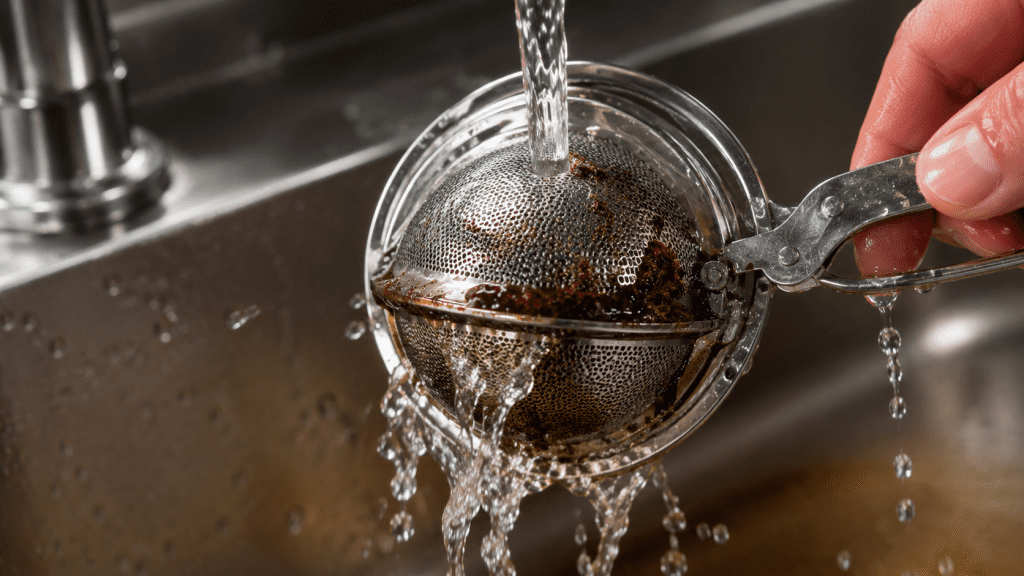
Hold the filter under warm running water to wash away loose tea particles, residue, and surface oils. Rinsing right after use, while the residue is still fresh, is much more effective than waiting until it has dried onto the mesh.
Step 3: Wash With Mild Soap
Apply a small amount of mild dish soap and gently clean the filter by hand, working around both the mesh and the frame. Avoid aggressive scrubbing at this stage a light touch is usually all that’s needed for residue that hasn’t hardened.
Step 4: Clean the Mesh
For a more thorough clean, use a soft-bristle brush to work through the mesh openings, corners, and edges where the frame meets the mesh. Never use needles, knives, or other sharp objects to pick residue out of the mesh they can enlarge the openings or tear the fine metal strands, permanently damaging the filter.
Step 5: Rinse Thoroughly
Rinse the filter again until all soap, loosened residue, and tea particles are gone. Thorough rinsing matters here, since any soap left behind in the mesh can affect the taste of your next brew.
Step 6: Dry Completely
Shake off any excess water, then set the filter in a clean, ventilated spot to air dry fully. Avoid storing it while it’s still damp trapped moisture in the mesh is one of the most common causes of corrosion and rust spots over time.
How to Remove Tea Stains From a Stainless Steel Tea Filter
Tea stains come from tannins, the same natural compounds that give tea its color and some of its flavor. Tannins can cling to stainless steel and gradually darken the mesh, especially with frequent use or strongly brewed tea.
For light staining, a warm water soak combined with a small amount of mild detergent is often enough, followed by gentle brushing to lift the discoloration. For more persistent stains, a cleaning method suited to stainless steel such as a gentle baking soda paste worked into the stained areas can help, provided it’s compatible with your specific filter. Stubborn stains are usually better addressed with repeated gentle cleanings over time than with one aggressive scrubbing session, which risks scratching the metal or damaging fine mesh.
How to Remove Mineral Buildup From a Stainless Steel Tea Filter
If you brew tea with hard water, you may eventually notice a chalky, dull, or gritty film on the filter that’s mineral buildup, left behind as water evaporates and minerals like calcium settle on the surface.
To address it:
- Recognize the buildup it typically looks dull, white, or slightly rough compared to the surrounding metal, rather than the brownish tint of tea stains.
- Soak the filter using a descaling approach suited to stainless steel, giving the solution time to loosen the deposits rather than trying to scrub them off dry.
- Rinse thoroughly afterward to remove all loosened mineral residue.
- Follow your manufacturer’s recommendations if the filter came with specific cleaning guidance.
If you’re considering a household acid like vinegar for descaling, make sure the method is compatible with your filter’s finish and manufacturer instructions first. Never mix vinegar or any acid with bleach or other cleaning chemicals combining them can create dangerous fumes.
How to Unclog a Stainless Steel Tea Filter
A filter that’s slow to drain or clearly blocked usually needs a bit more attention than a routine rinse:
- Rinse from both sides of the mesh where practical, since flushing water in the reverse direction can help dislodge trapped particles.
- Soak the filter to loosen dried residue before you try to clean it.
- Work a soft brush through the mesh openings from multiple angles.
- Repeat the soak-and-brush process if the clog doesn’t clear on the first attempt.
- Inspect the mesh once it’s clean to confirm the openings are fully clear.
Avoid sharp objects, excessive pressure, or aggressive scraping when trying to unclog mesh. These can stretch or enlarge the tiny openings, which permanently changes how the filter performs even if it looks clean afterward.
Can You Put a Stainless Steel Tea Filter in the Dishwasher?
It depends on the filter. Some stainless steel tea filters are labeled dishwasher-safe, particularly simpler ball-style or basket-style infusers, while others have components, hinges, or finishes that hold up better to hand washing. Always check the manufacturer’s instructions before assuming your filter can go in the dishwasher.
If dishwasher cleaning is confirmed safe for your filter, follow whatever cycle and detergent guidance the manufacturer provides rather than just tossing it in with a normal load. When in doubt, hand washing with mild soap is the safer default and gives you more control over how gently the mesh is handled.
Can You Use Baking Soda or Vinegar to Clean a Stainless Steel Tea Filter?
Both are common household options for tea filters, and each can help with certain kinds of buildup. Baking soda mixed into a paste works as a gentle abrasive that can help lift surface stains and neutralize odors, while diluted vinegar is mildly acidic and can help break down mineral deposits and tannin buildup on some filters.
That said, not every filter responds to these methods the same way, and results can vary depending on the mesh gauge and finish. Follow your manufacturer’s recommendations where available, and always rinse the filter thoroughly after using either method so no residue or lingering smell carries over into your next cup. Never mix vinegar with bleach or other incompatible cleaning chemicals.
Common Mistakes When Cleaning a Stainless Steel Tea Filter
- Leaving used tea leaves sitting in the filter for hours or overnight
- Scrubbing with abrasive pads that can dull or scratch the finish
- Using needles, knives, or other sharp objects to clear the mesh
- Reaching for harsh chemicals instead of mild, filter-safe cleaners
- Skipping the final rinse and leaving soap or cleaning residue behind
- Storing the filter while it’s still wet
- Ignoring early mineral buildup until it becomes difficult to remove
- Pressing too hard on delicate, fine mesh while cleaning
- Continuing to use a filter that’s visibly torn or damaged
How to Maintain a Stainless Steel Tea Filter
- Rinse the filter immediately after each use
- Empty tea leaves promptly rather than letting them sit
- Do a deeper clean whenever staining or buildup becomes noticeable
- Keep mesh openings clear so water flows properly
- Dry the filter completely before putting it away
- Store it somewhere clean and dry
- Check the mesh periodically for early signs of wear
- Replace the filter if the mesh or frame becomes damaged
Stainless Steel Tea Filter vs. Disposable Tea Bags
| Feature | Stainless Steel Tea Filter | Disposable Tea Bags |
| Reusable | Yes | Generally no |
| Ongoing waste | Lower | Higher |
| Cleaning | Required | Usually not required |
| Tea leaves | Loose-leaf friendly | Usually contained |
| Durability | Generally high | Single-use |
| Maintenance | Regular cleaning | Minimal |
Both options have their place depending on convenience needs and how you prefer to brew — a stainless steel filter takes a bit more upkeep but supports loose-leaf tea and repeated use, while disposable bags require no cleaning at all.
Signs Your Stainless Steel Tea Filter Needs Replacement
- Torn or ripped mesh
- Openings that have become visibly enlarged or distorted
- A cracked, bent, or broken frame
- Loose hinges, clasps, or other components
- Severe corrosion or rust that cleaning doesn’t remove
- Structural damage that doesn’t improve with cleaning
- A filter that no longer fits securely in your teapot or mug
A damaged filter may let tea leaves through, brew unevenly, or simply stop performing the way it should at that point, cleaning won’t fix the underlying issue, and replacement is the better option.
Frequently Asked Questions
- How do you clean a stainless steel tea filter?
Remove the used tea leaves, rinse the filter thoroughly, gently wash it with mild soap and a soft brush, rinse again, and let it dry completely before storing.
- How do you remove tea stains from stainless steel mesh?
Soak the filter in warm water with a mild detergent, then gently brush the stained areas. For tougher stains, a baking soda paste can help, though results depend on the filter’s finish and staining level.
- How do you unclog a stainless steel tea strainer?
Rinse from both sides of the mesh, soak the filter to loosen residue, then work a soft brush through the openings. Repeat as needed, and avoid sharp tools that could enlarge or damage the mesh.
- Can you put a stainless steel tea filter in the dishwasher?
Some are dishwasher-safe and some aren’t check your specific filter’s manufacturer instructions before washing it that way.
- Can you use baking soda to clean a stainless steel tea filter?
Yes, a baking soda paste can help lift light to moderate stains and neutralize odors on many stainless steel filters, though it may not work identically on every finish.
- Can you use vinegar to clean a stainless steel tea filter?
Diluted vinegar can help with mineral deposits and tannin buildup on some filters. Confirm it’s compatible with your filter first, and never mix it with bleach or other chemicals.
- How often should you clean a reusable tea filter?
Rinse it after every use, and do a deeper clean whenever you notice staining, slower water flow, or visible buildup frequency depends on how often you brew tea.
- Why is my stainless steel tea filter turning brown?
Brown discoloration is typically from tannins in tea building up on the metal surface over repeated use. Regular rinsing and periodic deeper cleaning help prevent it from becoming heavy staining.
- How do you remove mineral buildup from a tea strainer?
Soak the filter using a descaling method suited to stainless steel, then rinse thoroughly. Hard water is the usual cause of chalky or dull mineral deposits on the mesh.
- When should you replace a stainless steel tea filter?
Replace it if the mesh is torn, the openings are stretched or damaged, the frame is cracked or bent, or corrosion persists after cleaning.
Conclusion
A stainless steel tea filter earns its reusability with a bit of routine care. Rinsing it right after each use, washing gently with mild soap, cleaning the mesh with a soft brush rather than sharp tools, and drying it completely before storage will keep it working well for a long time. When stains or mineral deposits do build up, gentle, filter-appropriate methods and a little patience go further than aggressive scrubbing. And if the mesh or frame ever becomes damaged beyond what cleaning can fix, replacing the filter is the better choice for both performance and safety.
Looking for durable stainless steel filters or custom stainless steel mesh filtration products? Contact Xintan Filter to discuss your filtration requirements and application-specific solutions.